Level 3, Gallery 4, SAM at Tanjong Pagar Distripark
General Admission (Free for Singaporeans and PRs)
SAMCollection: The Present is Unstable
SAMCollection: The Present is Unstable considers the exhibition as something fluid and constantly changing. Works from the Collection will be brought in and out over time, placed in new relationships, and activated through talks, tours, and public programmes. There is no single theme here. Each time works is taken out of storage and put on display, they tell a different story and each configuration tests a different question. They may reveal concerns that were not visible before and connect older questions to present-day struggles, helping us understand what kind of world we are living in now. In whichever configuration you encounter the Collection, it asks that we begin with one question: what is the work trying to say, and how might it matter today?
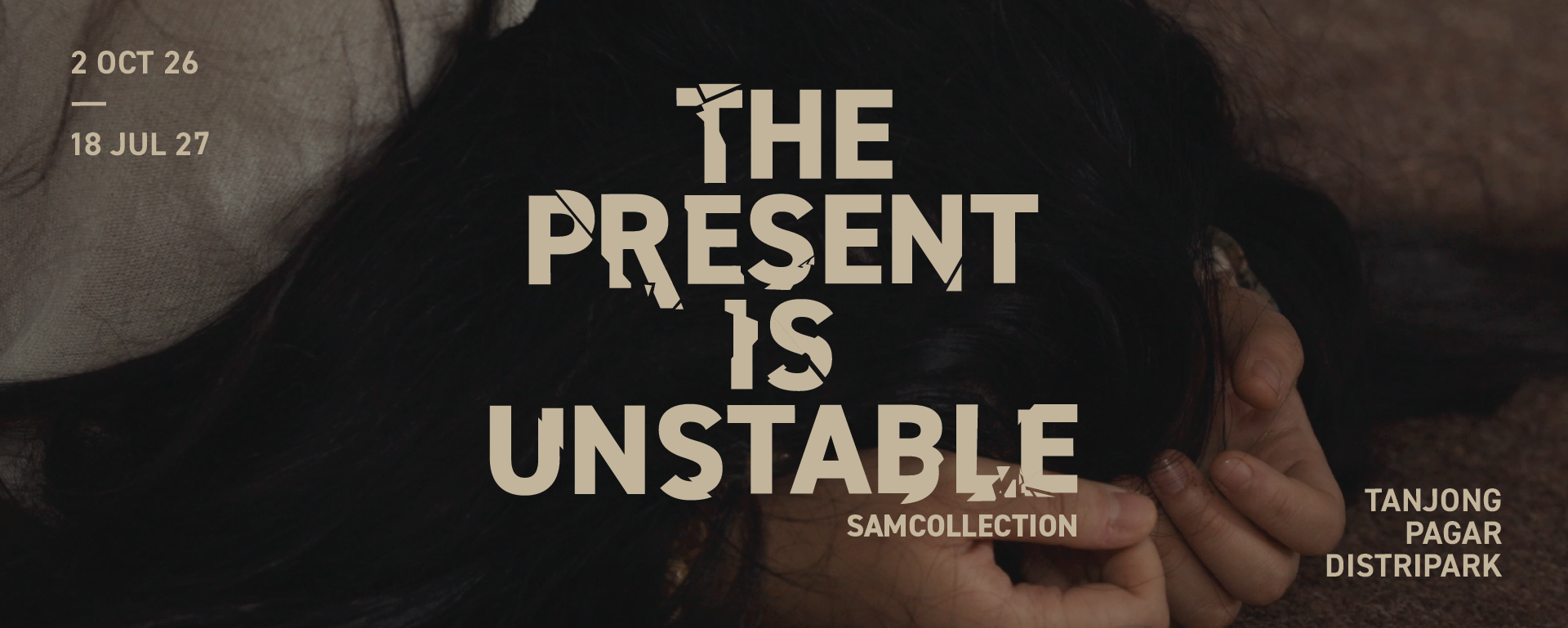
Hero banner: Hao Jingban, I Witness, 2025. Courtesy of artist and Blindspot Gallery.
Mobile banner: Nadiah Bamadhaj, Casting Spells for the Movement, 2021, installation view, Jakarta Biennale 2021, Galeri Nasional, Jakarta, Indonesia.
Image courtesy of the artist. Photo by Yudha Kusuma Putera, MES 56.
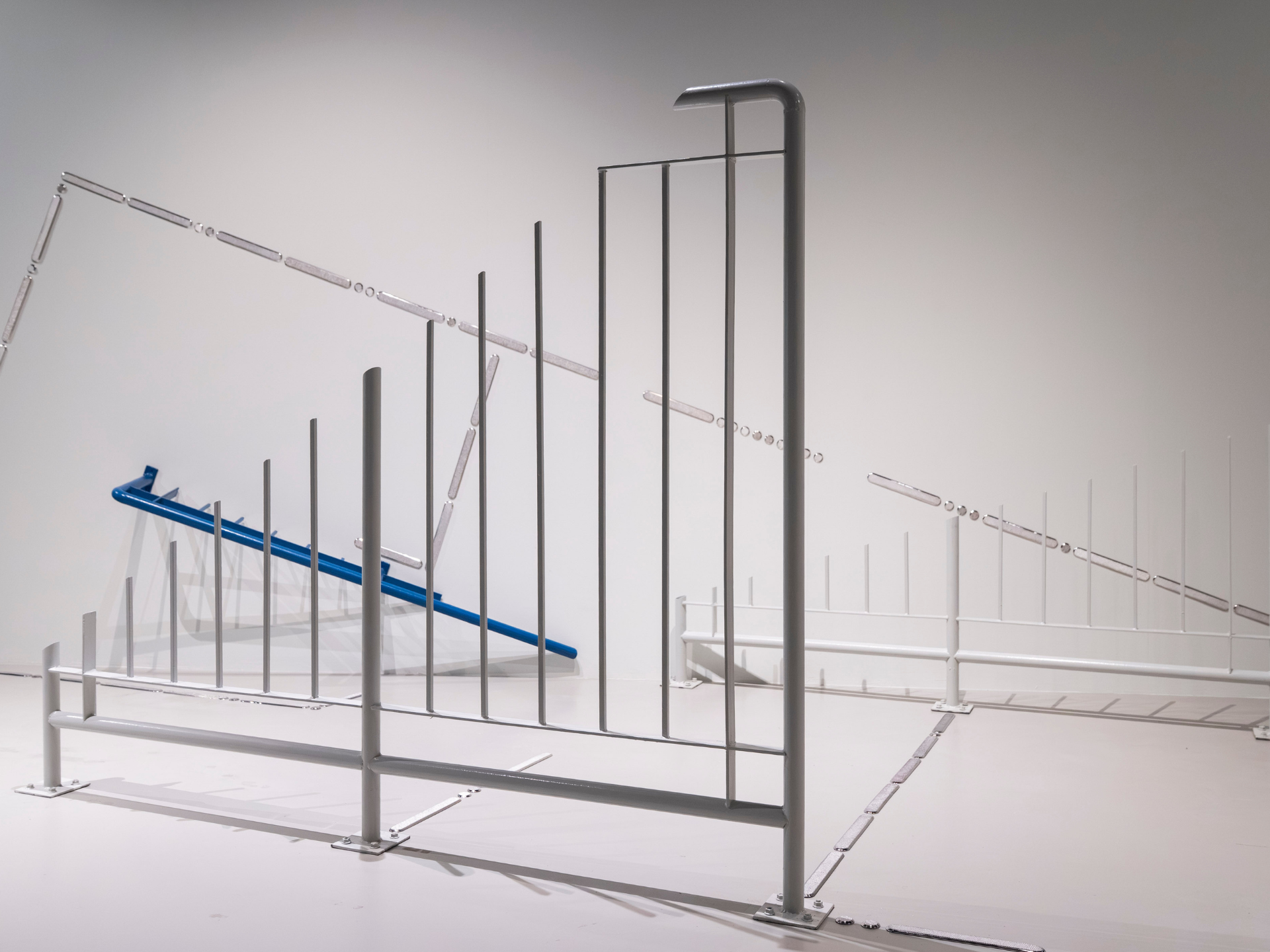
Thumbnail: Jason Wee, Labyrinths, 2017, galvanised steel, dimensions variable. Image courtesy of the artist and Ames Yavuz.
about the artists
Nadiah Bamadhaj Nadiah Bamadhaj is an artist based in Yogyakarta who works across various mediums, including sculpture, site-specific installation, digital video, and print. She is known for her intricate charcoal and collage drawings, using its various layers to unravel the intersections where identity and sociopolitical environments meet. Bamadhaj’s recent body of work explores the social and political intricacies of life within Indonesian society. She uses public figures, flora and fauna, batik motifs, mythology, and architecture to articulate her observations of everyday experiences, including those concerned with memories shared across generations, political systems, and identity-making.
Farida Batool
Based in Lahore, Pakistan, Farida Batool is a visual artist whose multimedia practice explores Pakistan’s political upheavals and tumultuous history amidst global challenges. Moving through the city as a flaneuse (a female flâneur), she examines questions of identity, everyday life, and cultural change. Her work also explores gender and its manifestations within patriarchal structures. She is an active member of the Awami Art Collective, a group which uses art in public spaces to foster dialogue on peaceful coexistence.
Chua Chye Teck 蔡财德 Chua Chye Teck is an artist who lives and works in Singapore. His practice spans photography, installation, and sculpture, drawing inspiration from surrounding environments to reframe the act of looking. Through explorations of space, physicality, and materiality, his work examines how photographic images are perceived and experienced. Working with photography and the installation of large-format prints and found objects, Chua foregrounds the tactile process through which images are made, encountered, and presented.
Hao Jingban 郝敬班 Hao Jingban is an artist who lives and works between Yunnan, China and Berlin, Germany. Her works explore the distance between the present and past, and between micro- and macro-narratives. Hao works with archives, interviews, and performance to connect personal experiences with events that affect wider society. Her recent projects look at how the COVID-19 pandemic, the war in Ukraine, and the Black Lives Matter movement have shaped the way people think, feel, and remember.
Manny Montelibano Manny Montelibano is a Visayan media artist, educator, and film and stage director based in Bacolod, Philippines. Working mainly with video and installation, his work looks at everyday experiences of politics, religion, media, and public life in the Philippines. Many of his works draw from images, language, and events circulating in contemporary Philippine society, often using repetition, distortion, and humour to question how they shape public perception. Montelibano is also active in cultural work in the Visayas, and has been involved with various organisations, including the National Commission for Culture and the Arts, Black Artists in Asia, and VIVA ExCon.
Gary-Ross Pastrana Gary-Ross Pastrana is an artist and curator based in Manila, Philippines. Central to his practice is his ongoing investigation into the relationship between ideas and objects. He is known for his conceptualist approach to art-making, bringing together poetic language, moving images, and material explorations with ideas and methods from various fields, such as music and science, to create new narratives. Alongside his artistic practice, Pastrana curates and organises exhibitions both within Manila and internationally.
Sin Wai Kin 单慧乾 Sin Wai Kin is a London-based artist whose work spans drag, performance, moving image, writing, and printmaking. Their work looks at how identity is made and performed, and how ideas of gender shape bodies, language, and our sense of time. Drag is a recurrent part of their practice, used not only as a form of expression but also to question familiar ideas about gender and identity. Drawing on science fiction, Peking and Cantonese opera, Taoist allegories, art history, pop culture, and personal memory, Sin brings these different references together in unexpected ways.
Wei Leng Tay 郑玮玲
Based in Singapore, Wei Leng Tay is an artist who works across photography, video, and installation. Her practice explores constructions of identity and memory through the lived experiences of individuals, often in relation to geopolitical histories. Combining long-term engagements with individuals, families, and communities with research into photographic archives, interviews, and collaborative methods, she investigates photography both as image and material object. Through experimentation with analogue and digital processes, Tay explores how photographs are made, circulated, perceived, and interpreted.
Jason Wee 黃漢衝 Jason Wee is an artist, writer, and curator based in New York, USA, and Singapore. Working across architecture, poetry, photography, and visual art, he examines how authority shapes the way histories and spaces are understood. His work often begins with accounts that appear fixed or singular before drawing out what they suppress, contradict, or leave unresolved. Through images, writing, and spatial projects, he makes room for different voices and competing versions of the past and future. Wee is the founder and director of Grey Projects, an independent art space and library in Singapore, and editor of the poetry journal Softblow.
artwork highlights
related events
check out the line-up of free and ticketed events below!
GUIDED TOUR
Curator Tour
Ever wondered how an exhibition comes to life, or how art helps us make sense of memory, identity, and change? Join the curators of The Present Is Unstable for an insider’s walkthrough of our latest Collection Show.
Meeting point: Level 3, Gallery 4
Free, by registration (Admission fees to the exhibition apply)
• Sat, 3 Oct | 3.30pm - 4.30pm | Register here
Archival pigment print mounted on metal composite, painted wood, non-reflective glass, and vinyl; Dimensions variable (wall vinyl); 81 × 69 cm (framed print); Collection of Singapore Art Museum
Video: 2-channels; 16:9; colour and sound (stereo); 28 min; Collection of Singapore Art Museum
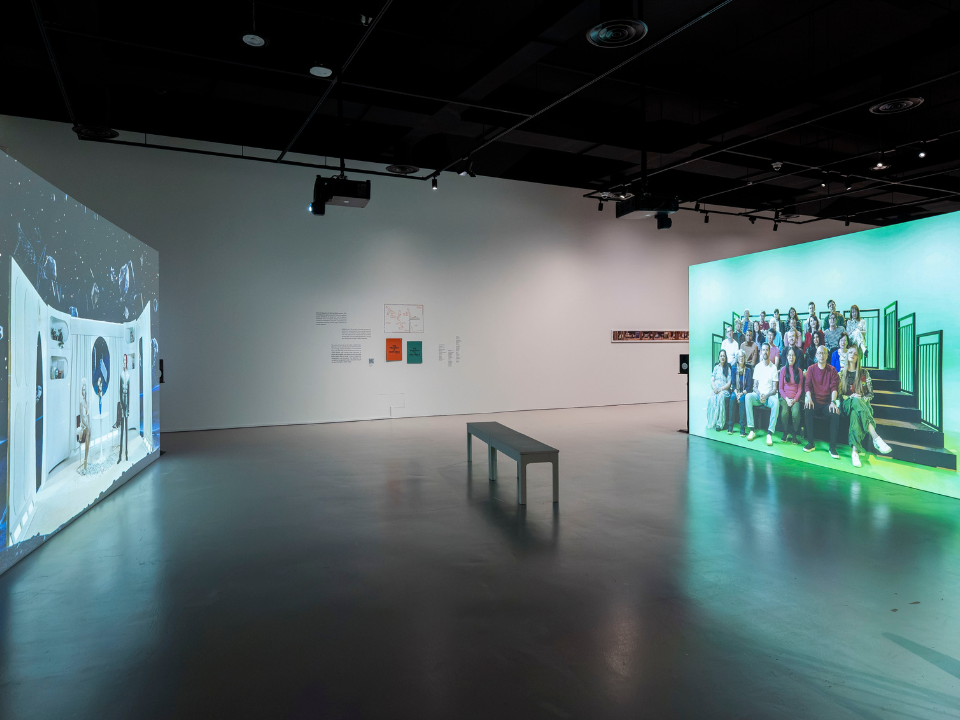
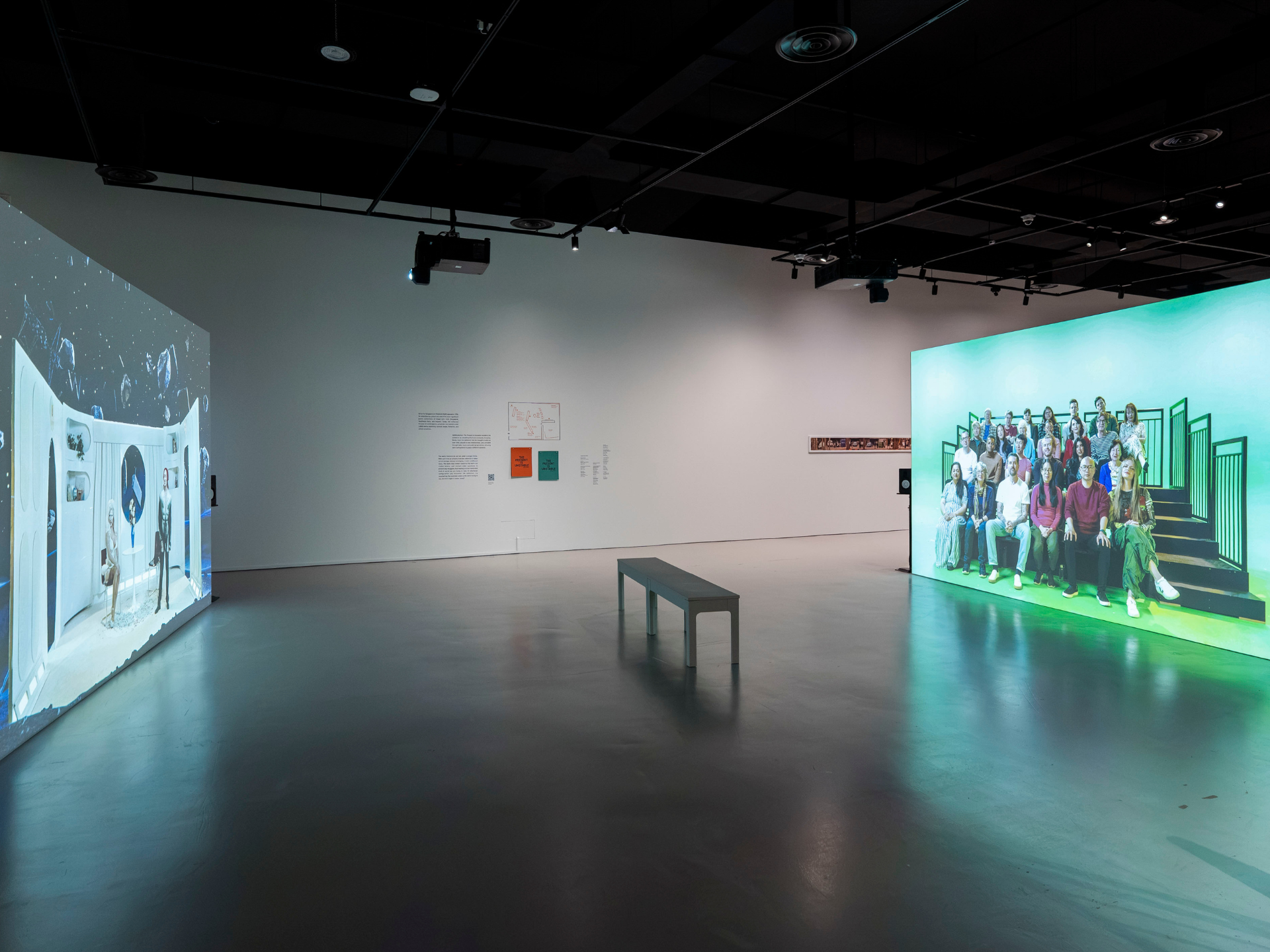
The Time of Our Lives unfolds as a speculative sitcom, blending science fiction, melodrama, and performance. It follows a couple—with both roles played by the artist—as they move through familiar milestones in life. These scenes loop, glitch, and fold back on themselves as a glitching doomsday clock, with recurring visual motifs disrupting any sense of narrative coherence or linear time.
At intervals, The Storyteller—also played by the artist—interrupts the sitcom with contradictory monologues that challenge our assumptions about truth, meaning, and the authority of storytelling. Meanwhile, a studio audience watches, mirroring us as viewers. As they laugh, gasp, applaud, cheer, and jeer, their reactions shift the energy of the scenes, creating a recursive loop where viewers become part of the spectacle.
Viewed alongside the video installation The Time of Our Lives, the face wipes function as a relic of a character’s unmaking. They offer an uncanny reminder of not just the characters themselves, but also the self beneath the mask. Sin often creates tangible works related to their drag characters, and here, the three face wipes serve as canvases that question gendered bodily decorations through the lens of drag.
Installation view of Sin Wai Kin's The Time of Our Lives (2024). Image courtesy of Singapore Art Museum.
Hao JingbanI Witness
2025
Video: 3-channel; 16:9; colour and sound (stereo); 54 min 41 sec;
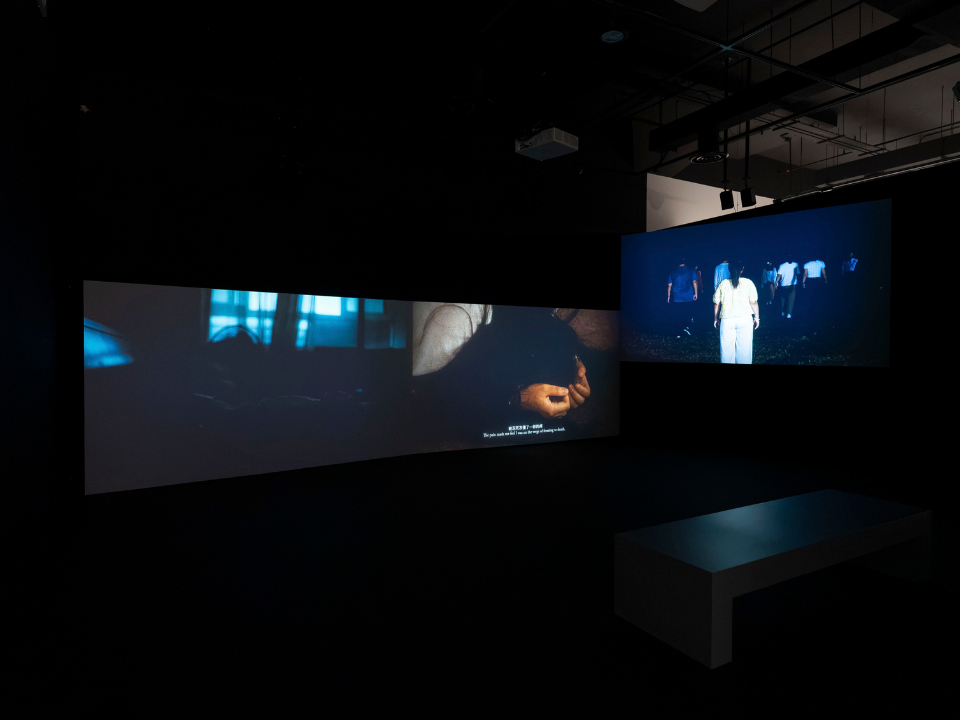
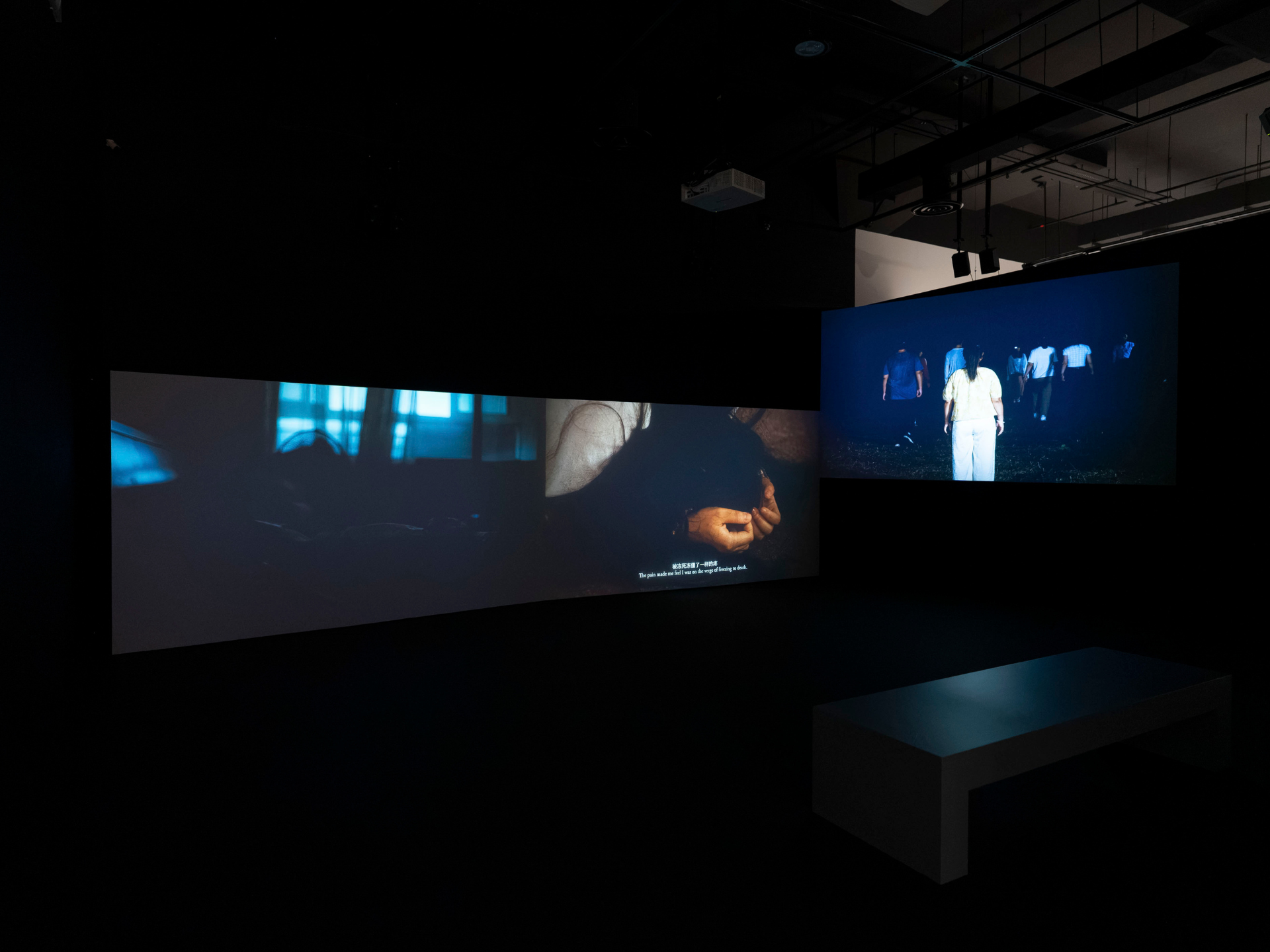
I Witness is about grief and how difficult it can be to express. It looks at the memories of people who have lost someone close to them, and at the ways mourning often happens quietly and in private.
This work focuses on individuals who have experienced profound personal loss that persists over time. The centre screen documents a workshop on authentic movement, which focuses on the relationship between movers and witnesses. Movers follow their inner impulses to move with their eyes closed, while witnesses observe and connect with the emotions expressed through these movements. The other two screens in the work present a series of silent everyday activities and a performance rooted in choreographed movement and theatre. Here, grief presents itself not as overt emotion, but as something that exists in the persistence of habitual acts and gathering of bodies.
Commissioned by the Han Nefkens Foundation, Mori Art Museum, M+, Hong Kong and Singapore Art Museum.
Installation view of Hao Jingban's I Witness (2025). Image courtesy of Singapore Art Museum.
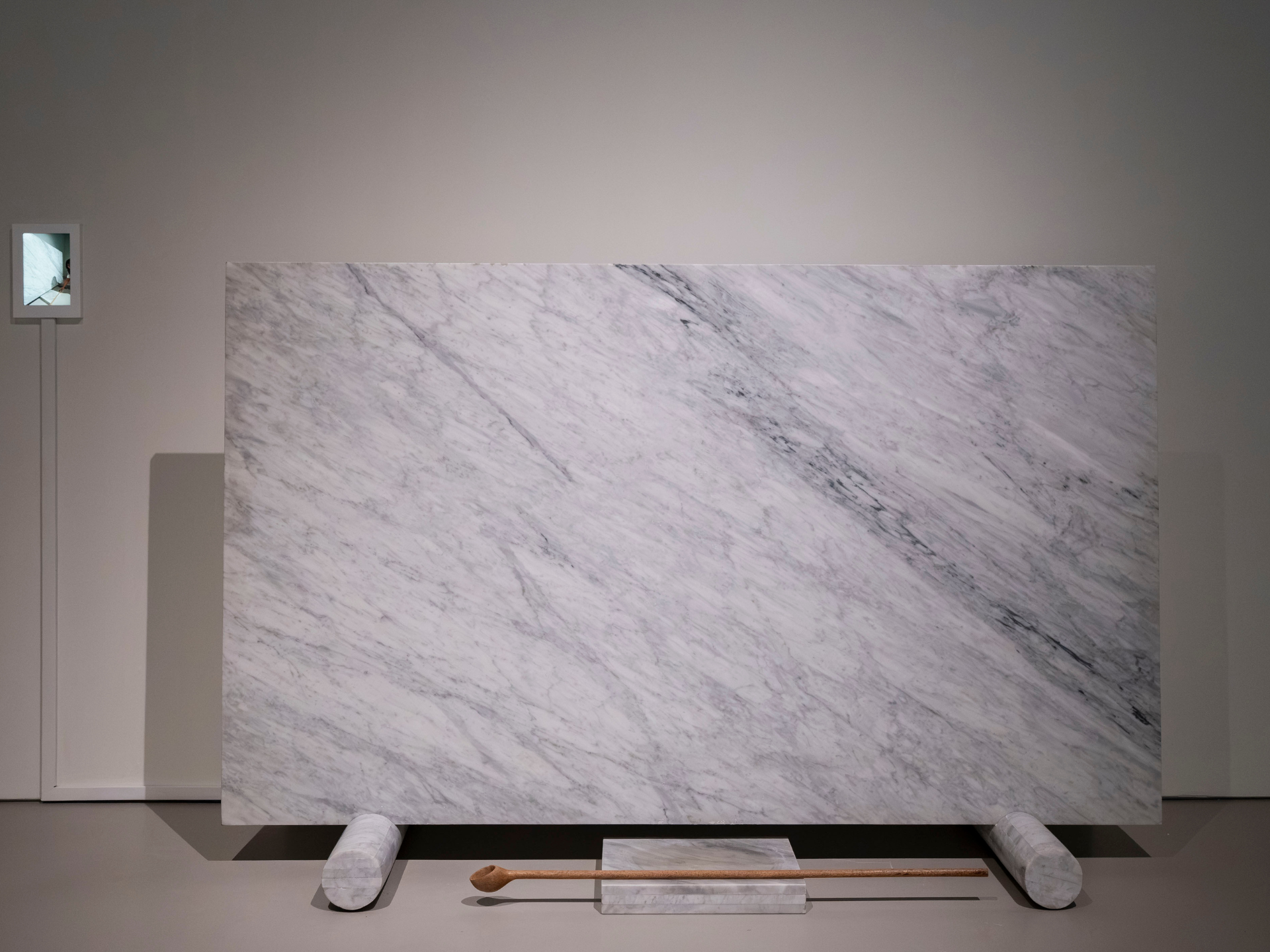
Gary-Ross PastranaWater Cuts (stone)
2017
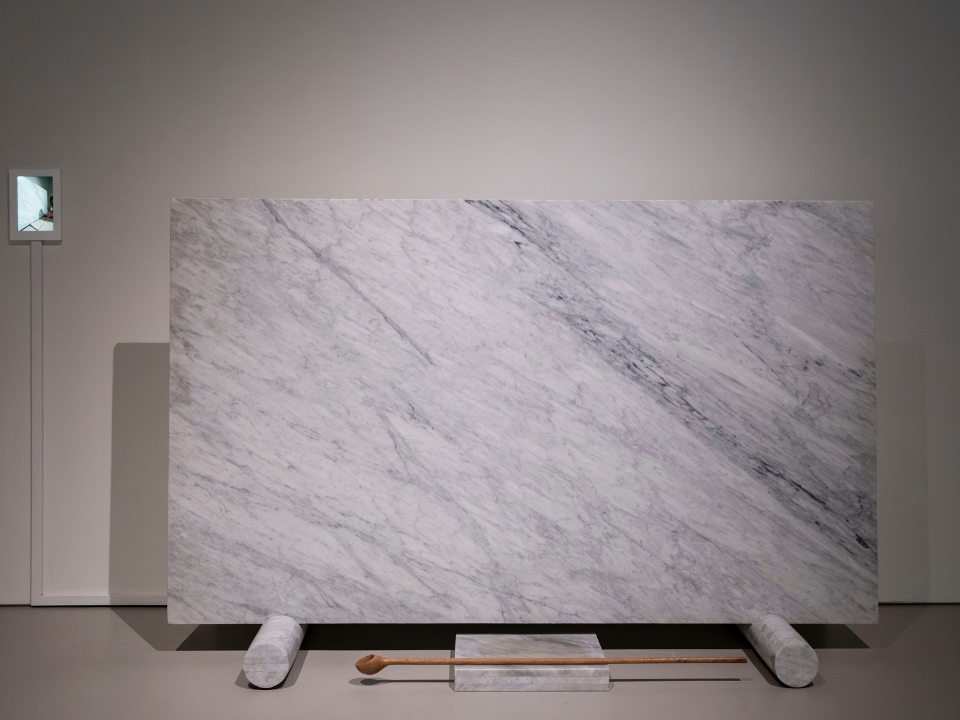
Marble, wood, water and sea salt; 120 x 200 x 40 cm; Collection of Singapore Art Museum
Inspired by various Asian idioms that describe water's ability to wear away even the hardest stone, Pastrana’s work invites visitors to ladle rivulets of water onto a marble slab. This repeated action aims to leave a mark on the stone, imagining that the cumulative gesture—at once meditative and ritualistic—might eventually “cut” into it. The Sisyphean absurdity of the task reflects the artist’s sense of humour, a trait that pervades his practice. It also highlights the forms of faith that people hold onto, and the substitutes they find when such faith is questioned.
Water Cuts (stone) exemplifies Pastrana’s practice, in which ordinary objects are imbued with poetic intensity while appearing unobtrusive. By inviting viewers to perform a simple action, the work attributes new meanings and possibilities to water and stone, opening them up for multiple interpretations.
Gift of Susan Santoso and Roh Projects. Installation view of Gary-Ross Pastrana's Water Cuts (stone). Image courtesy of Singapore Art Museum.
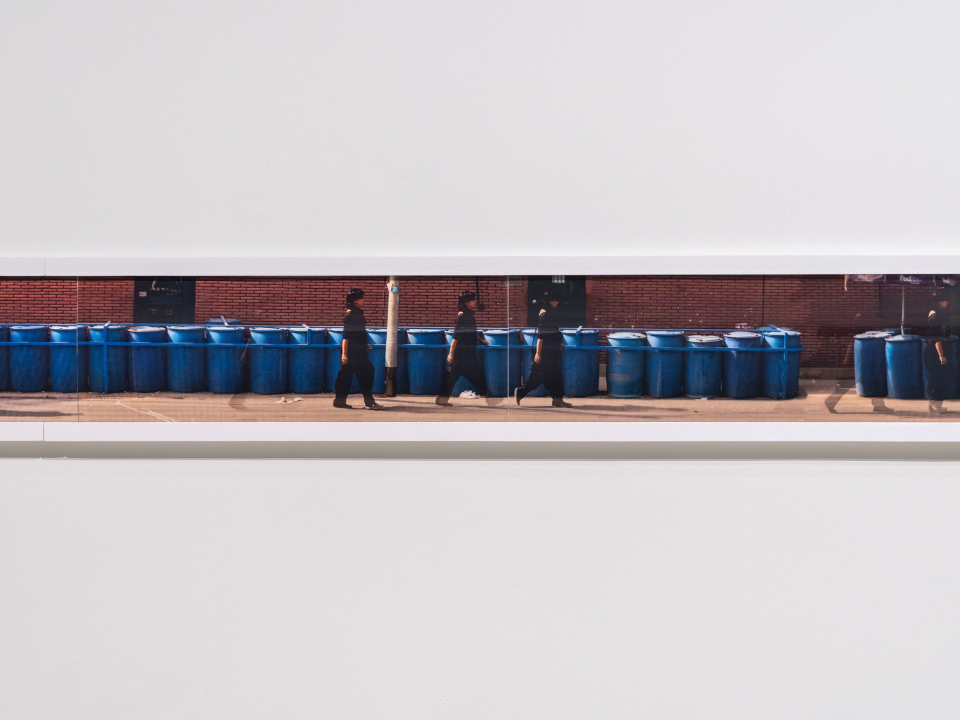
Farida BatoolKahani Eik Shehr Ki (Story of a City)
2012
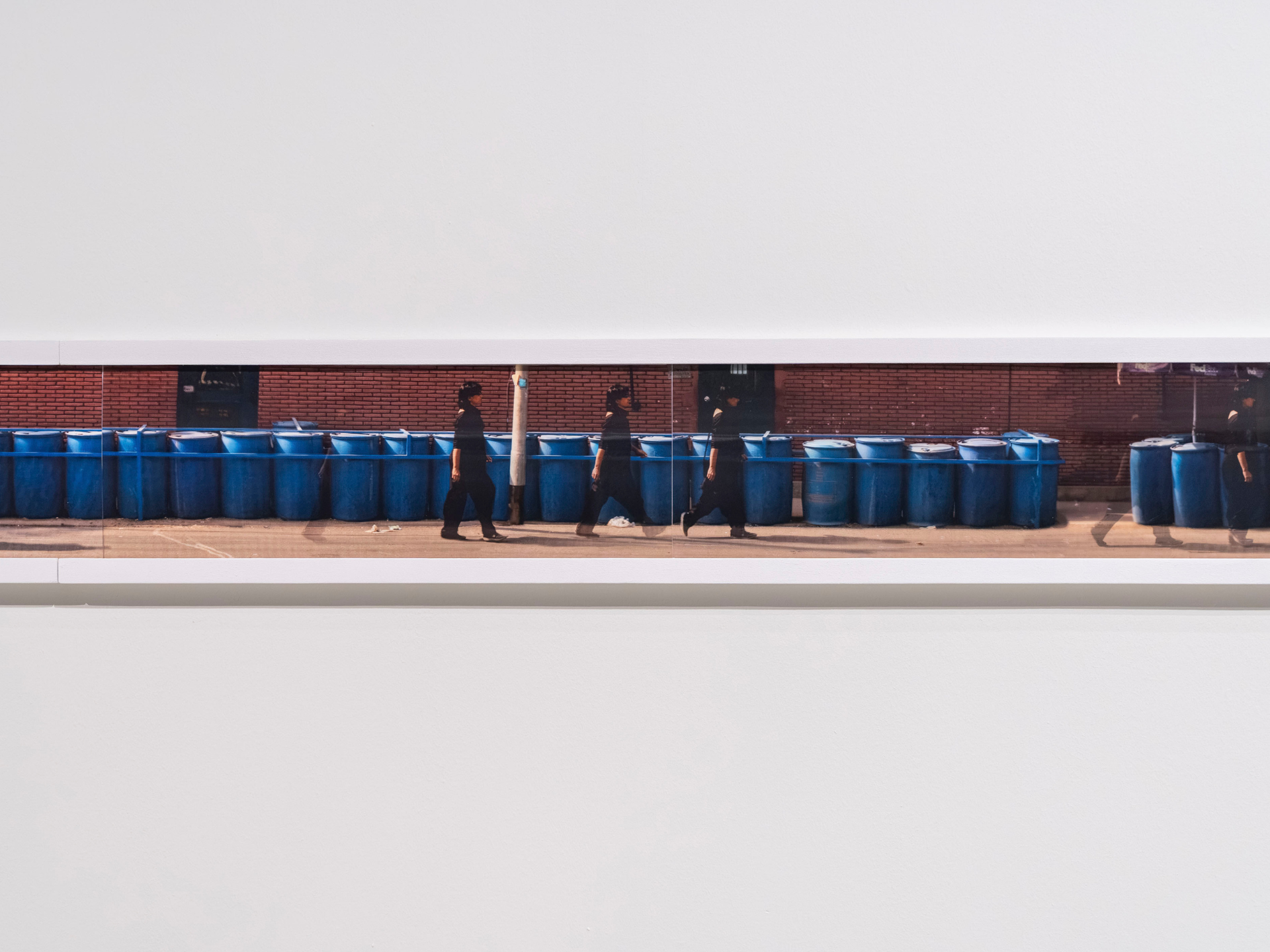
Lenticular print; 20.3 x 2144 cm; Collection of Singapore Art Museum
This work takes the form of a lenticular photographic print. Lenticular printing is a technique where multiple images are interlaced behind a lens to create an illusion of depth and movement as the viewer changes position. Here, the artist employs this deceptively simple technology to guide the viewers through the bustling urban environment of Lahore, Pakistan.
Batool captures scenes ranging from the mundane to the extraordinary: parked cars, precariously occupied rickshaws, street vendors, tattered advertisements, political posters, and graffiti left behind by religious rallies. Lahore's layered history can also be glimpsed in the architectural styles encountered along the way, reflecting its long history as a centre of political and cultural power, and its more recent transformation under British colonial rule and rapid urbanisation. In Kahani Eik Shehr Ki (Story of a City), like the artist who appears throughout the work, the viewer assumes the position of the flâneur—an observer that is simultaneously immersed in, yet detached from, urban life.
Detailed view of Farida Batool's Kahani Eik Shehr Ki (Story of a City) (2012). Image courtesy of Singapore Art Museum.
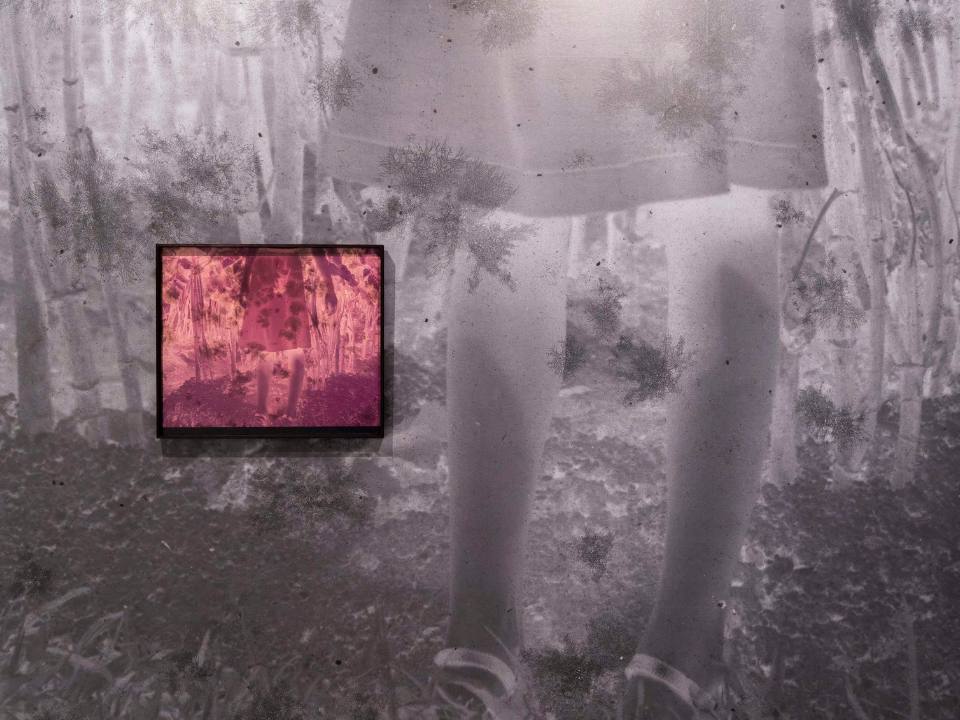
Wei Leng TayUntitled (sister)
2022
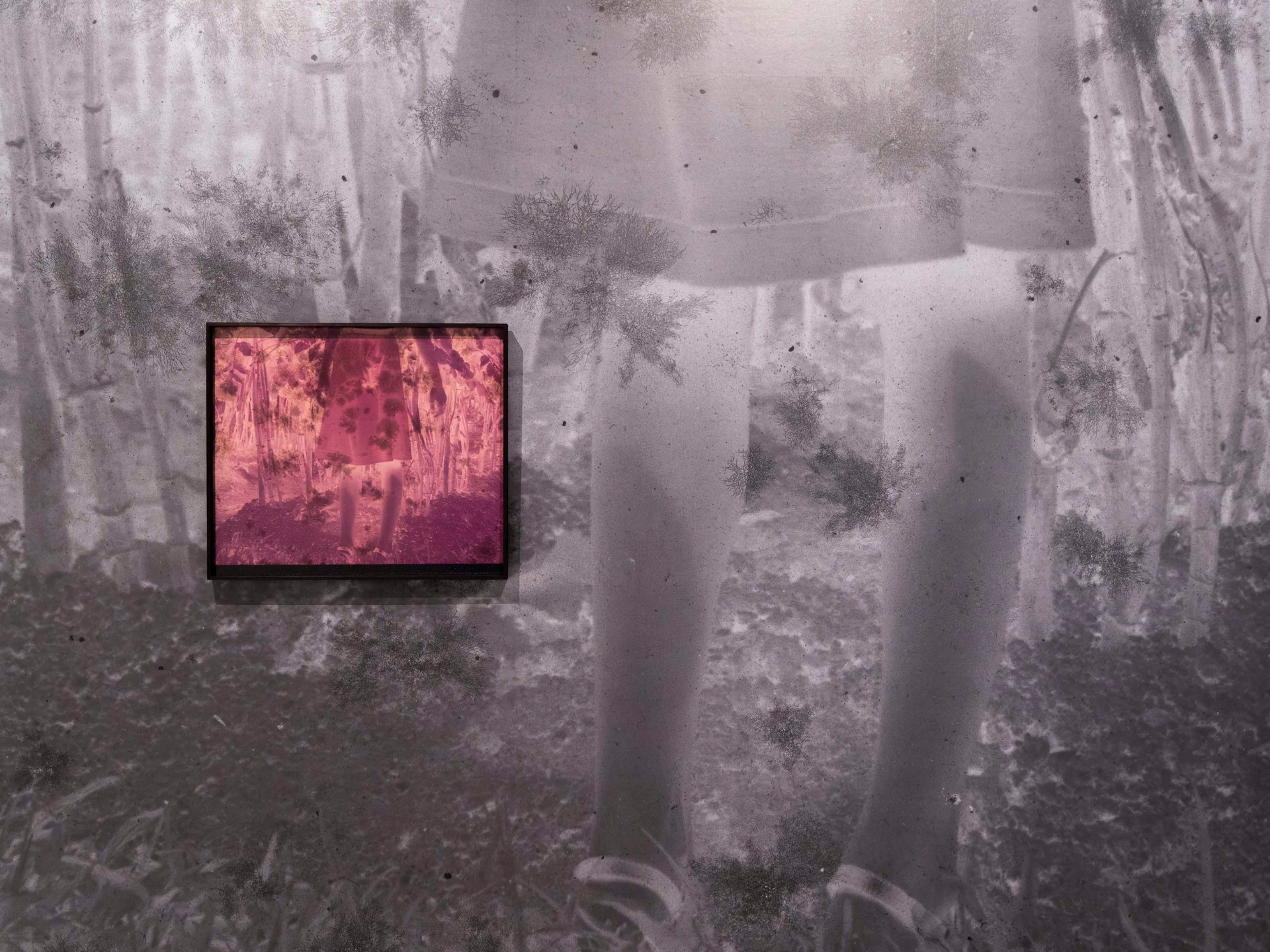
Archival pigment print mounted on metal composite, painted wood, non-reflective glass, and vinyl; Dimensions variable (wall vinyl); 81 × 69 cm (framed print); Collection of Singapore Art Museum
Untitled (sister) is part of a series where the artist experimented with a collection of family photographic slides dating from the 1960s and 1970s, when the artist’s family moved from Australia to Malaysia to Singapore. This trajectory parallels a wider phenomenon of migration during a period when families moved between newly independent nations such as Malaysia and Singapore, in search of a better lives. The surface of the slides have been marked by colour shifts, dust and spotting, becoming material records of time and climate across geographies.
Within this series, Untitled (sister) is distinct in comprising both a framed print and a wall vinyl. The vinyl presents an enlarged, colour-corrected version of the image, while the framed print retains the colour shifts of the original slide over time, juxtaposing two versions of the same image against each other. Here, the corrected print dominates, revealing how technical intervention can obscure—or make visible—the photograph's material history and the subjectivities it embodies.
Installation view of Wei Leng Tay's Untitled (sister) (2022). Image courtesy of Singapore Art Museum.
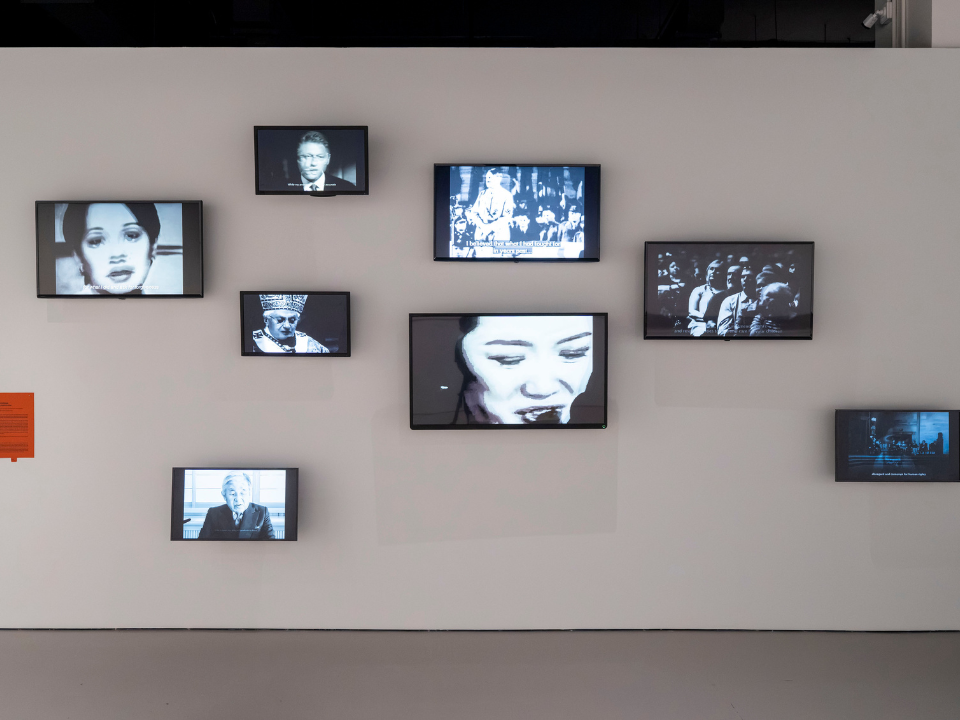
Manny MontelibanoSorry for the Inconvenience
2011-ongoing
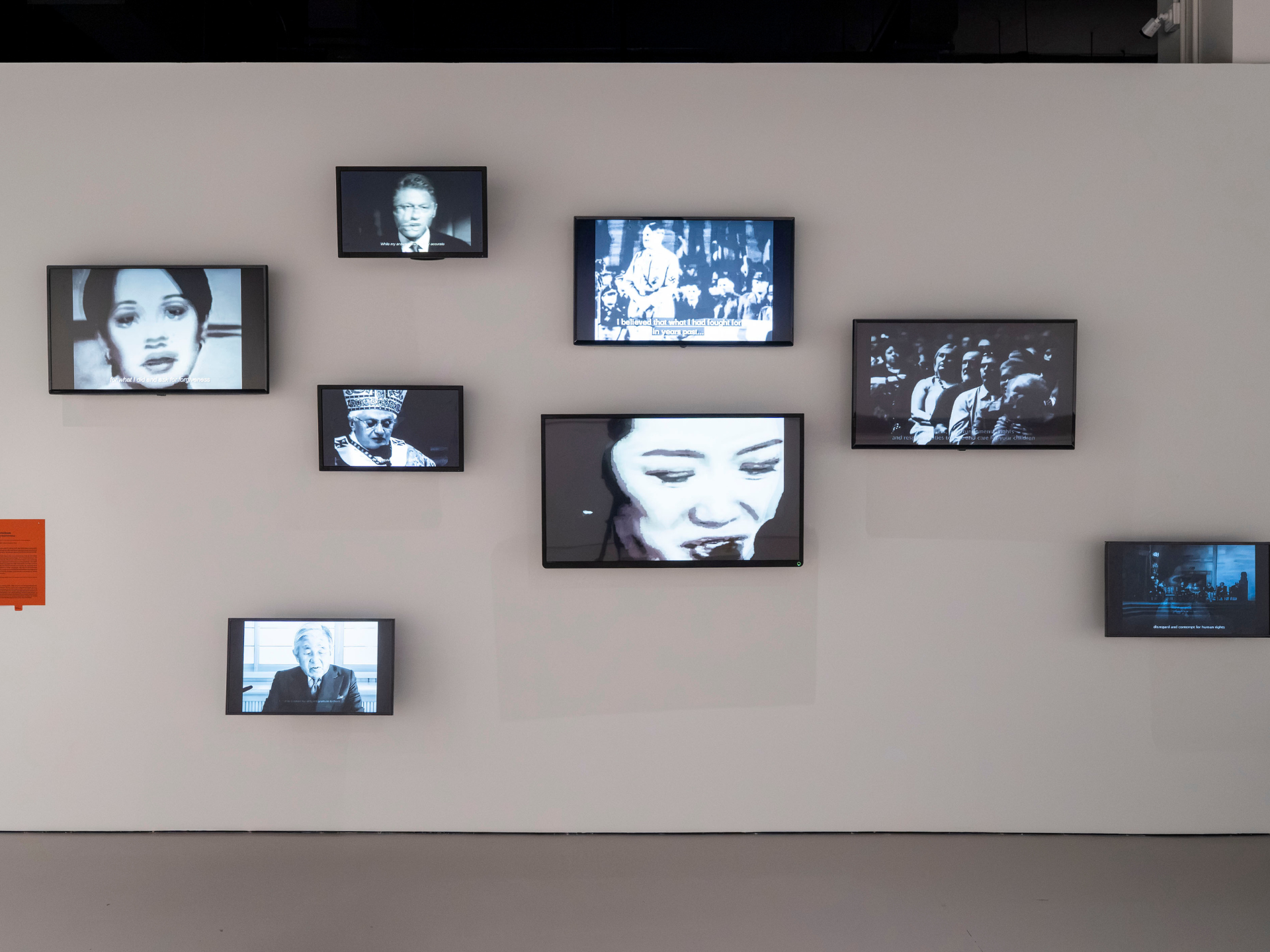
Video: multi-channel, 4:3 and 16:9, colour and sound (stereo), various durations; Dimensions variable; Collection of Singapore Art Museum;
This work explores how celebrity and authority are performed in mass media. Focusing on televised speeches, declarations, and apologies largely sourced from YouTube, it asks what really lies behind these publicly performed expressions.
Montelibano edited the video clips using techniques such as time delay and the repeated layering of the same image. As they loop and glitch, the images and words become difficult to understand. Rather than clarifying a message, repetition leads to a breakdown in communication. The result is a visually overwhelming video montage that shows how the constant circulation of media can flatten context and erode the legibility—and perhaps the legitimacy—of these messages. The title of the work also suggests how popular media can be wielded as a convenient tool to absolve responsibility—much like the phrase “sorry for the inconvenience,” which excuses a vexing situation.
Installation view of Manny Montelibano's Sorry for the Inconvenience (2011-ongoing). Image courtesy of Singapore Art Museum.
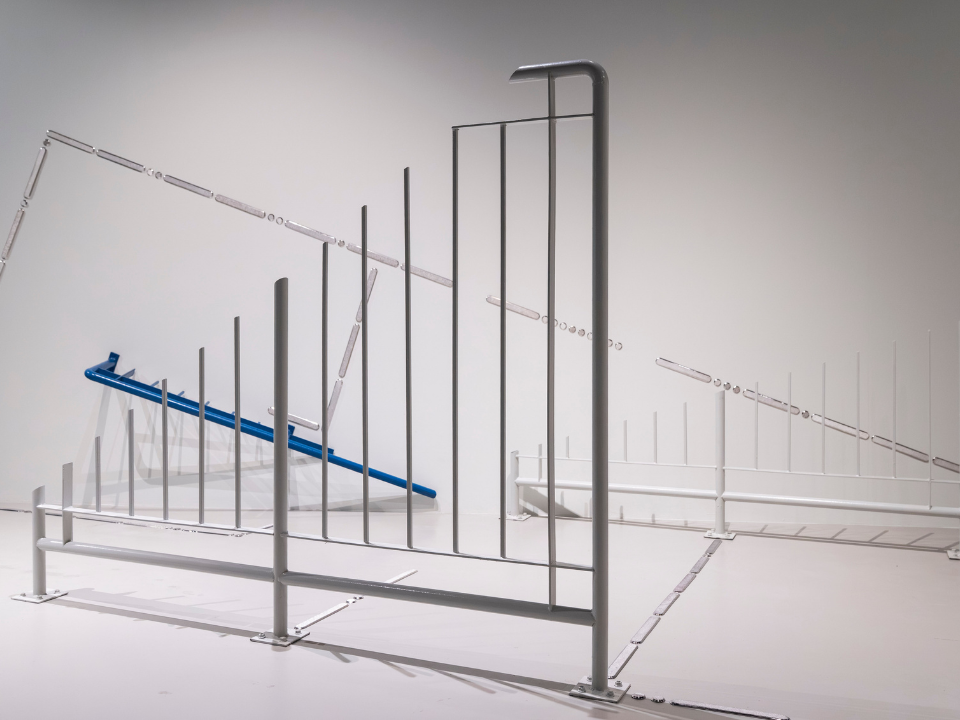
Jason WeeLabyrinths
2017
Stainless steel, galvanised steel and emulsion paint; Dimensions variable; Collection of Singapore Art Museum;
Labyrinths focuses on how navigation and wayfinding systems shape the way we move through public spaces. It considers how much our experience of and ability to move through a city are shaped by our reliance on signs and navigational cues.
The work comprises an assortment of fences that are exaggerated in height, length, and finish, appearing incomplete or oddly truncated. Amongst them are sections of tactile paving, which are commonly used in public spaces to assist visually impaired persons with navigation. However, they are not arranged in the usual repeated patterns, but in Morse code instead. The pattern spells out fragments of a verse from the poem “Archipelago” by Singaporean poet Boey Kim Cheng.
By transforming a navigational system into a coded poetic text, the work draws attention to the ways movement is both directed and interpreted. The oversized fences and disrupted tactile paving form a path that viewers are invited to enter, making walking a self-conscious act.
Installation view of Jason Wee's Labyrinths (2017). Image courtesy of Singapore Art Museum.
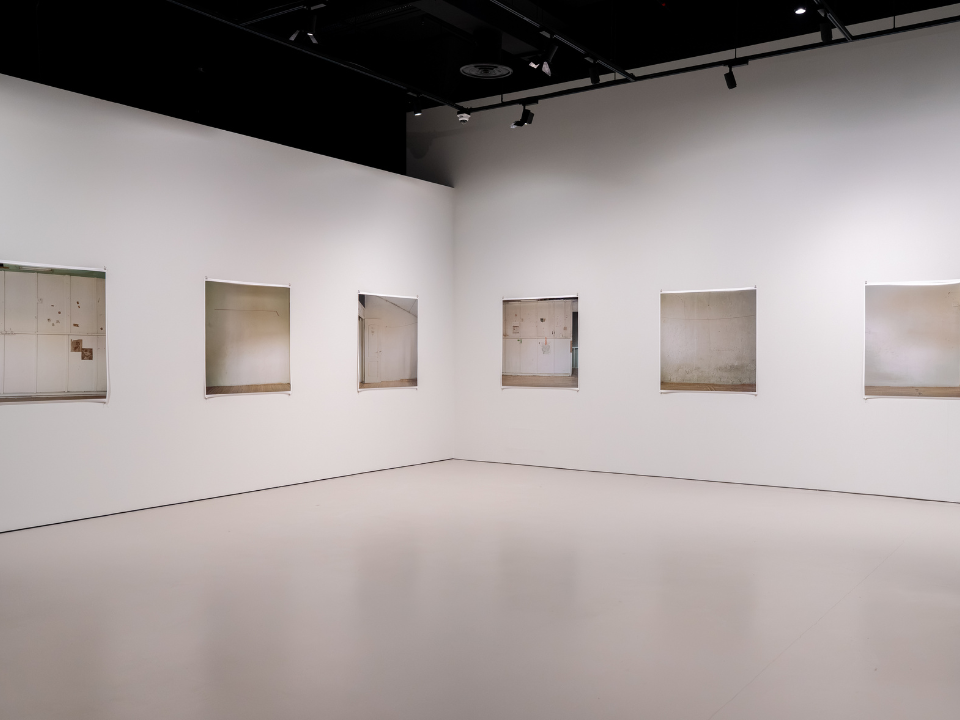
Chua Chye TeckEternity
2007
Inkjet print on Hahnemule photo rag pearl paper, vinyl text Set of 9, each 111.76 x 109.22 cm; Collection of Singapore Art Museum;
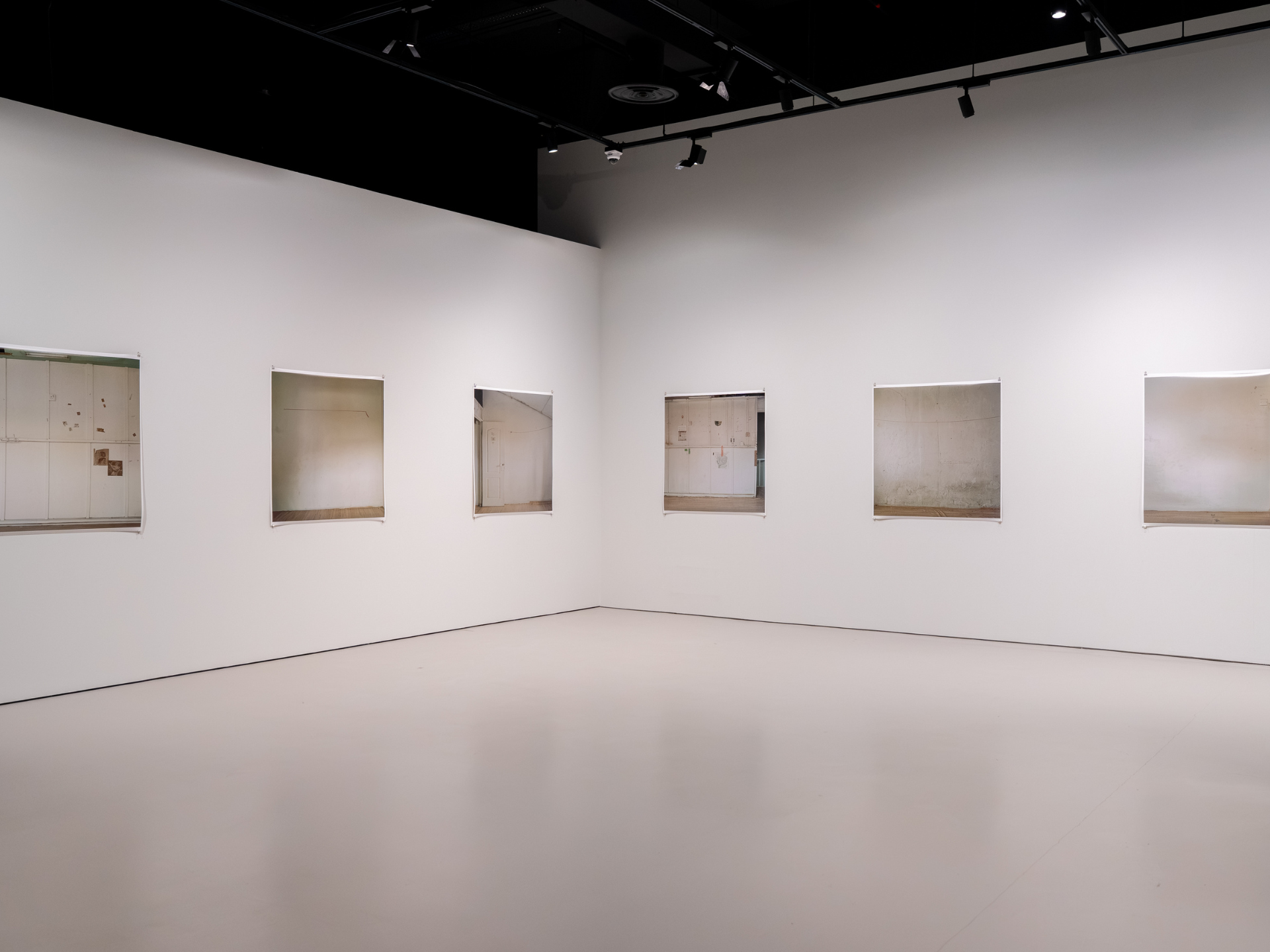
This work was made by the artist when he was invited to record the run-down shophouses at 107 and 109 Rowell Road before their conversion into Post-Museum, an independent cultural and social space initiated by the resident curatorial team, p-10. The resulting work comprises nine deliberately composed photographs of cubicle partitions located on the buildings’ second floor. Stripped almost bare, the partition walls retain only a few traces of their former occupants. These images invite viewers to imagine the cramped conditions of the rooms and piece together the lives and stories they once housed.
At first glance, the photographs are seemingly unbiased, offering banal depictions of vacant spaces. Yet, each one suggests a distinct narrative through the minute traces left behind. The tension between what is visible, what must be imagined, and what can be recalled highlights photography’s role in documentation and its capacity to negotiate between truth and fiction.
The title Eternity introduces further irony: what does photography capture when a viewer has no knowledge of a place, or when that knowledge gradually fades from memory?
Installation view of Chua Chye Teck's Eternity (2007). Image courtesy of Singapore Art Museum.
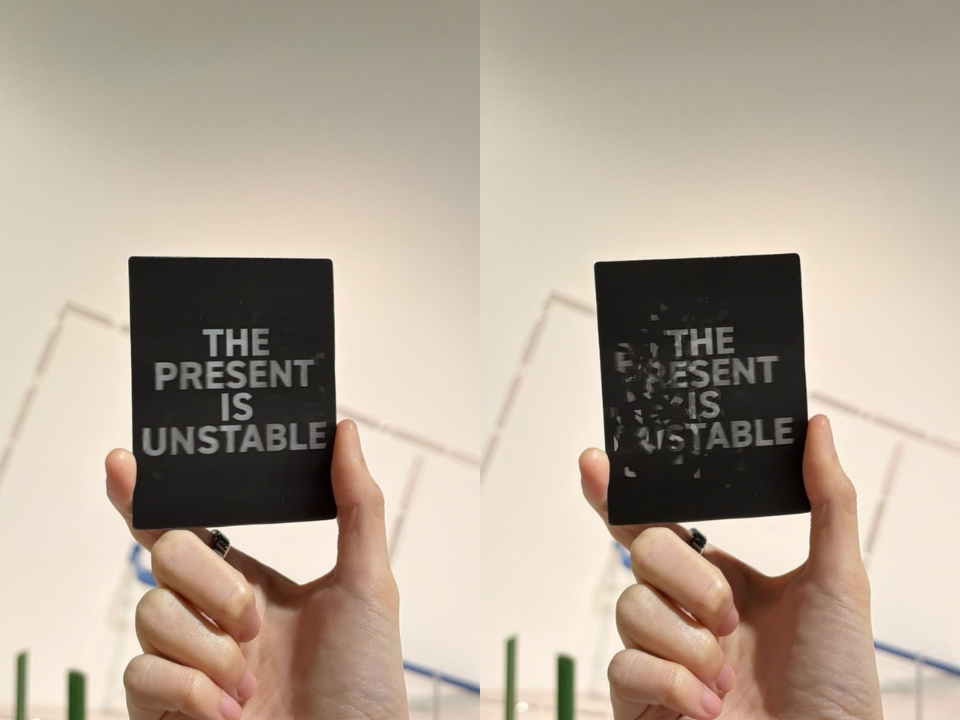
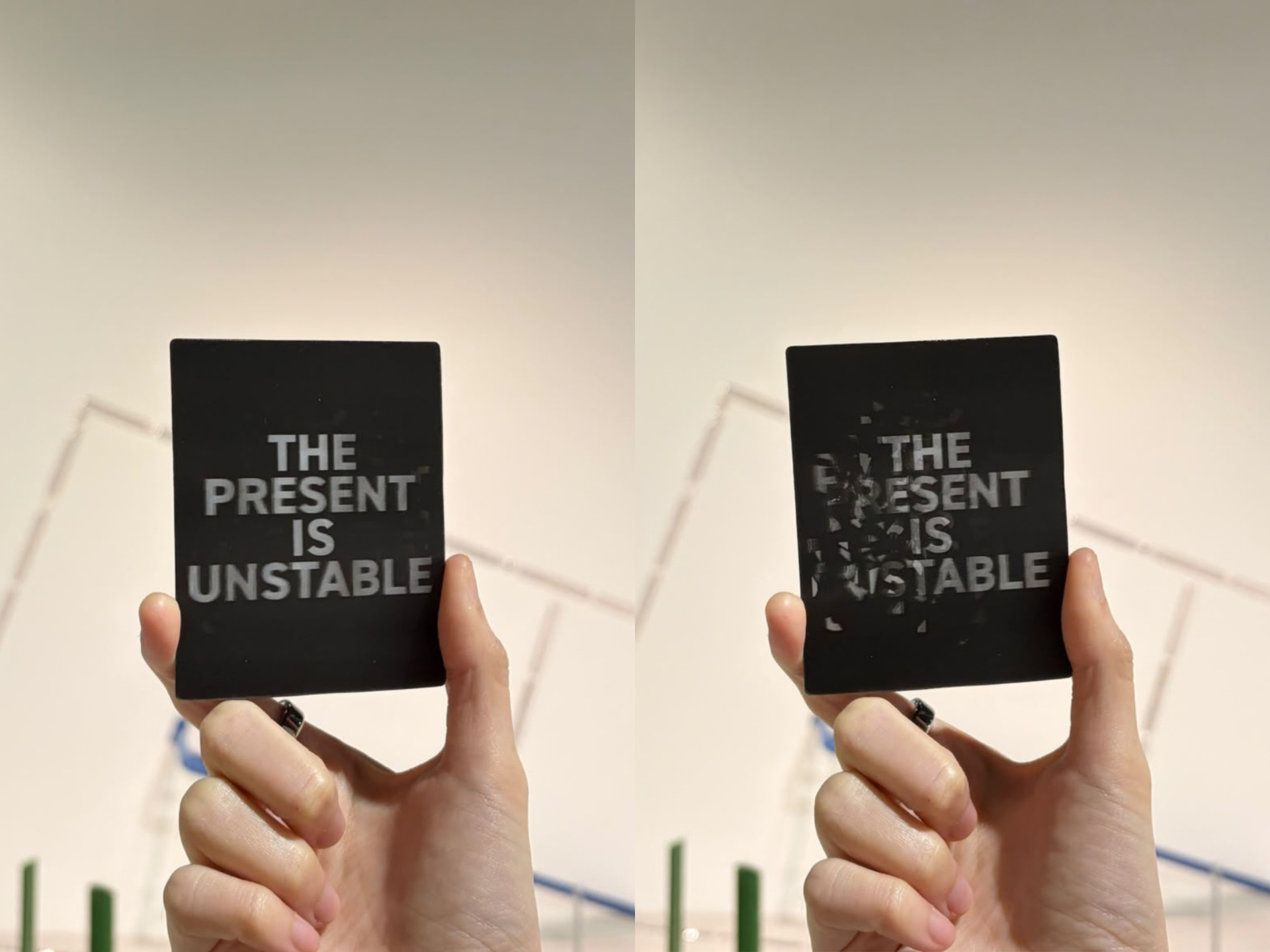
See things from a different angle. This lenticular magnet brings SAMCollection: The Present is Unstable to life, shifting between perspectives as you move it.
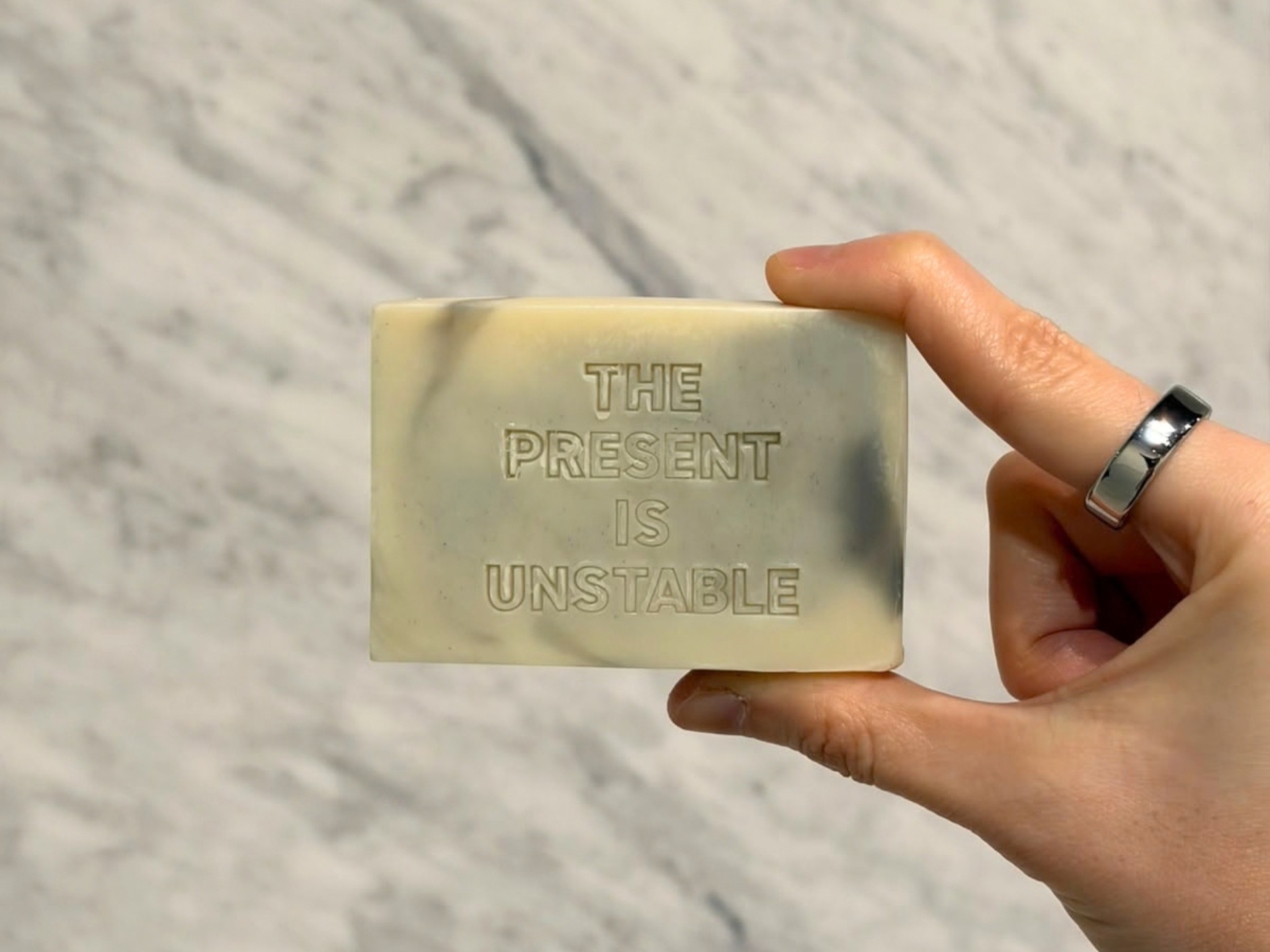
Marbled Charcoal Face & Body Soap Bar
Price: $20
Eczema-friendly. Produced in Singapore by my naked bar
Weight: 90g
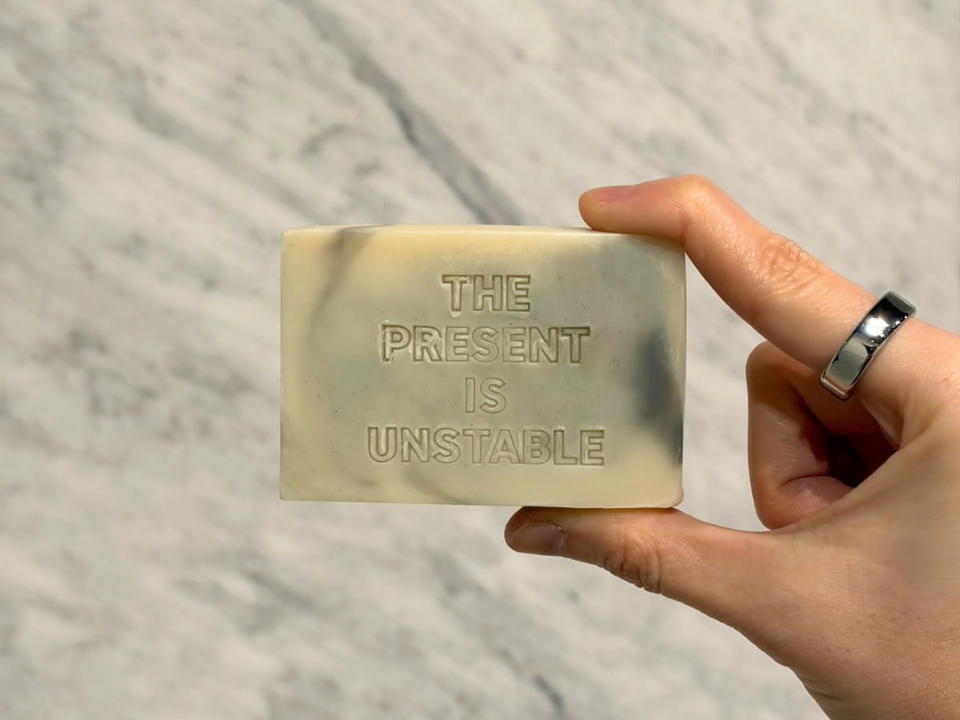
Taking its cue from Gary-Ross Pastrana’s Water Cuts (stone), this marbled charcoal soap bar plays with the idea of material transformed by water. Watch it shift, soften and slowly disappear with every wash—art that’s made to be used.
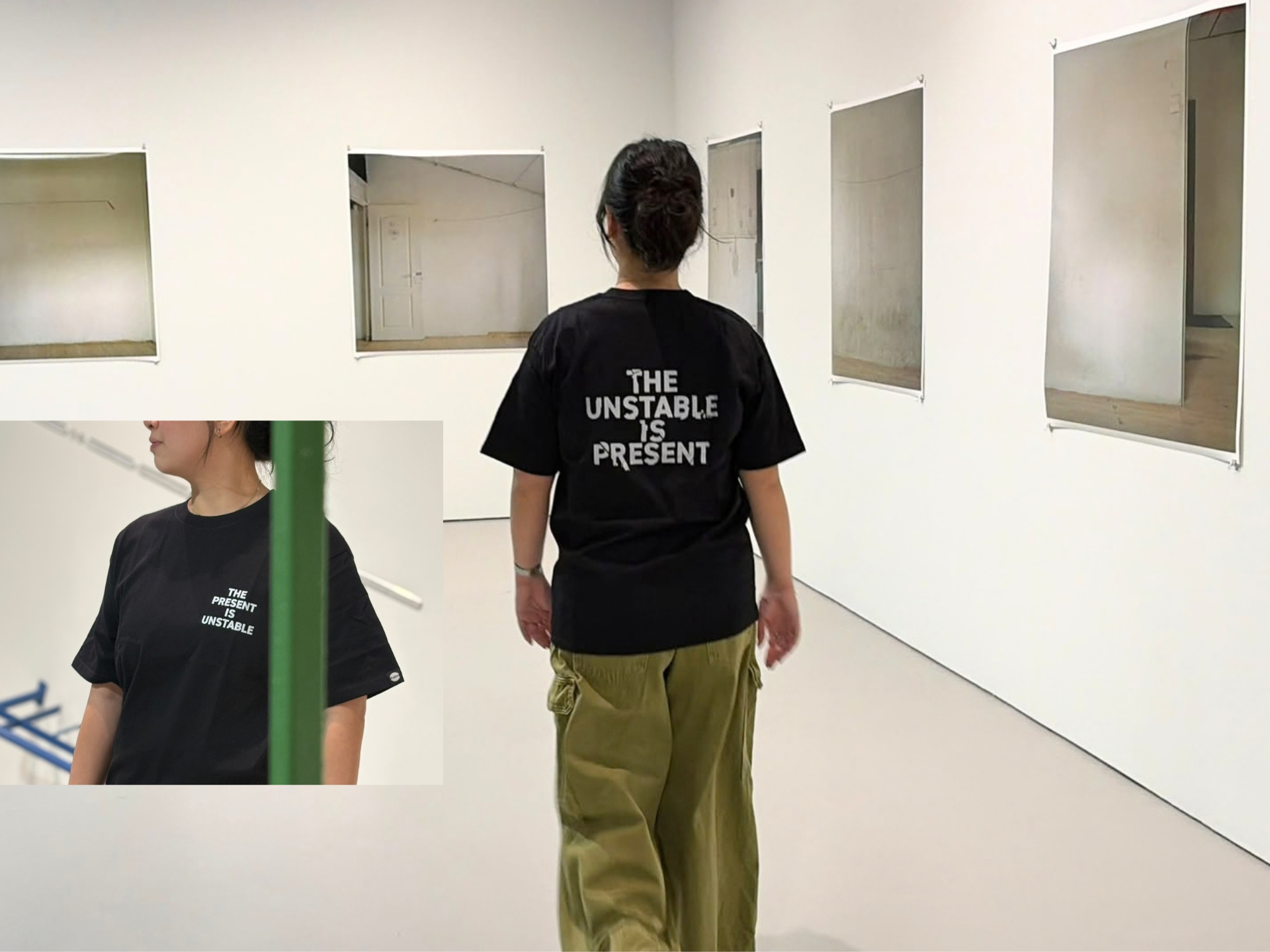
Exhibition T-Shirt – 250gsm Black T-shirt with Silver Print
Price: $32
Available in 3 sizes: M, L, XL
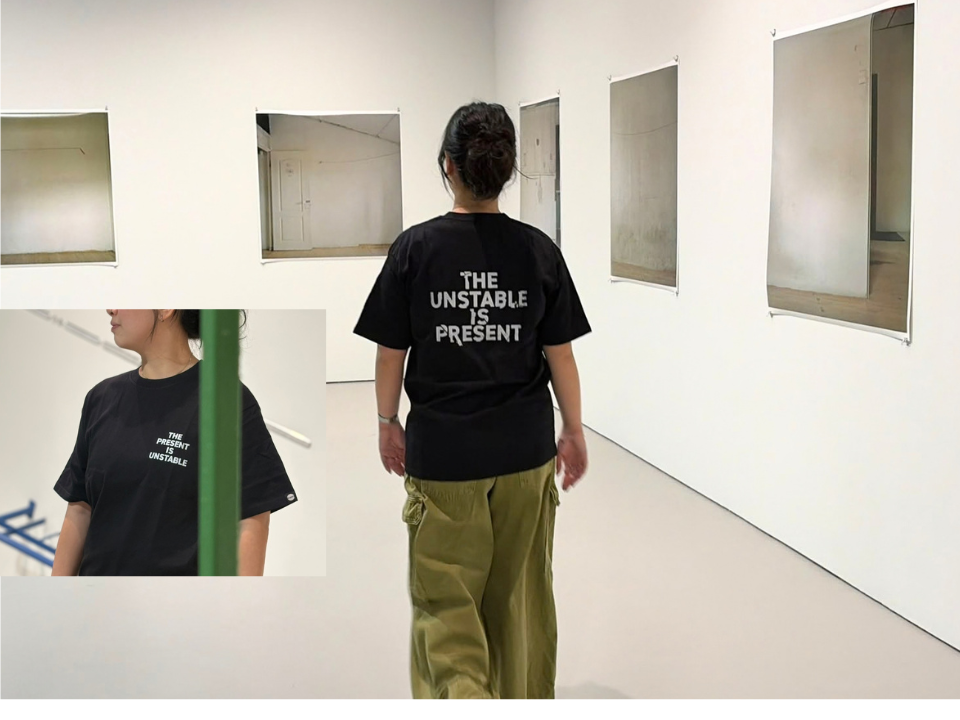
The present is unstable, or is the unstable present? Playing with the title of SAMCollection: The Present is Unstable, this T-shirt captures the idea of a present that is always shifting.

 Buy Tickets