Level 3, Gallery 3, SAM at Tanjong Pagar Distripark
General Admission (Free for Singaporeans and PRs)
Maria Taniguchi: Afterimage
Maria Taniguchi: Afterimage is the first monographic exhibition of the acclaimed artist presented by a Singapore museum. Taking its title from visual sensations that linger in a viewer’s field of vision, Afterimage highlights recurring concerns that run through Taniguchi’s practice, including repetition, time, and labour.
The exhibition is anchored by Taniguchi’s “brick paintings” (2008–ongoing), which are made by individually filling hand-drawn rectangular cells. The subtle shifts in colour that accumulate document the days, weeks, or months devoted to each painting reflecting the time and effort required to make them. Untitled and unnumbered, Taniguchi’s “brick paintings” are best understood as individual parts of a single artwork that continues to grow with each new painting.
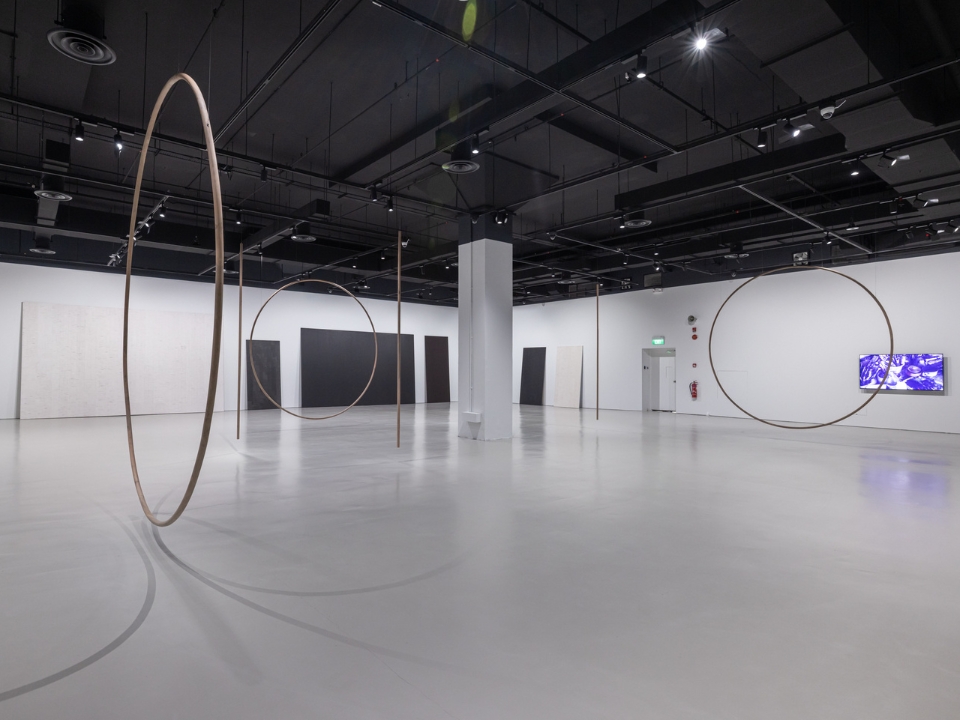
Alongside these towering canvases, Afterimage presents a new version of Runaways, a series of wooden sculptures made up of straight lines and circles that function as three-dimensional drawings floating in the gallery. Carved from the wood of Java plum trees, known in the Philippines as duhat, the sculptures carry deeply personal associations of the artist’s mother who craved the fruit while pregnant.
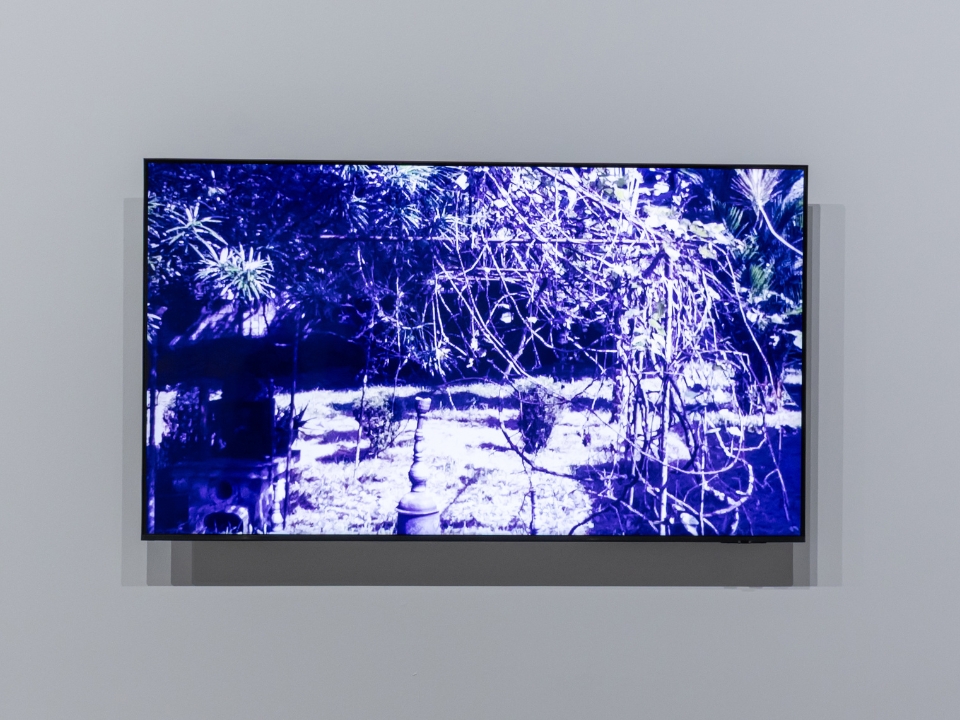
Four video works made between 2010–2026 demonstrate the development of Taniguchi’s relationship to space and materials. Key amongst these is a newly commissioned video, A painter, if black were a place (2026), which juxtaposes pixelated digital photos with fields of black painted by Taniguchi, inserting her subtle painterly style alongside images of her mother’s home, garden, and symbolic paintings. Together, these videos deploy the framing device of the camera and the screen to suggest our limited views of history, memory, labour, and the legacy of modernism.
about the artist
Maria Taniguchi (b. 1981, Dumaguete City; lives and works in Manila) works across a diverse range of media, including painting, video, sculpture, pottery, printmaking, drawing and writing. Central to her practice are questions of labour, repetition, and temporality, which she explores through an ongoing engagement with materiality and process. Her works invite audiences to experience material culture sensorially, connecting it to broader notions of time, space, labour and technology.
Taniguchi is the recipient of the 2015 Hugo Boss Asia Art Award. Her work has been featured in major international exhibitions including the 60th Venice Biennale (2024), the Gwangju Biennale (2018), the Biennale of Sydney (2018) and the 8th Asia Pacific Triennial of Contemporary Art, Brisbane (2015). Her solo exhibitions include presentations at MCAD Manila (2024) and the Jorge B. Vargas Museum, Quezon City (2011), among others.
artwork highlights
related events
check out the line-up of free and ticketed events below!
GUIDED TOUR
Join us on a guided tour and gain insights on artworks presented in Maria Taniguchi: Afterimage.
Curator Tour
• Sat, 21 Nov | 3pm - 4pm
*Meeting Point: Level 3, Gallery 3, SAM at Tanjong Pagar Distripark
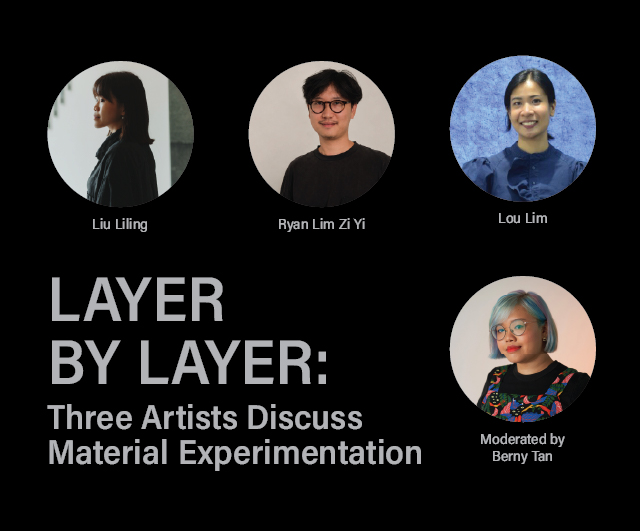
Expanding on artist Maria Taniguchi’s deep relationship with her materials, this panel discussion brings together three emerging artists: Liu Liling and Ryan Lim Zi Yi from Singapore, and Lou Lim from the Philippines, Taniguchi’s home country.
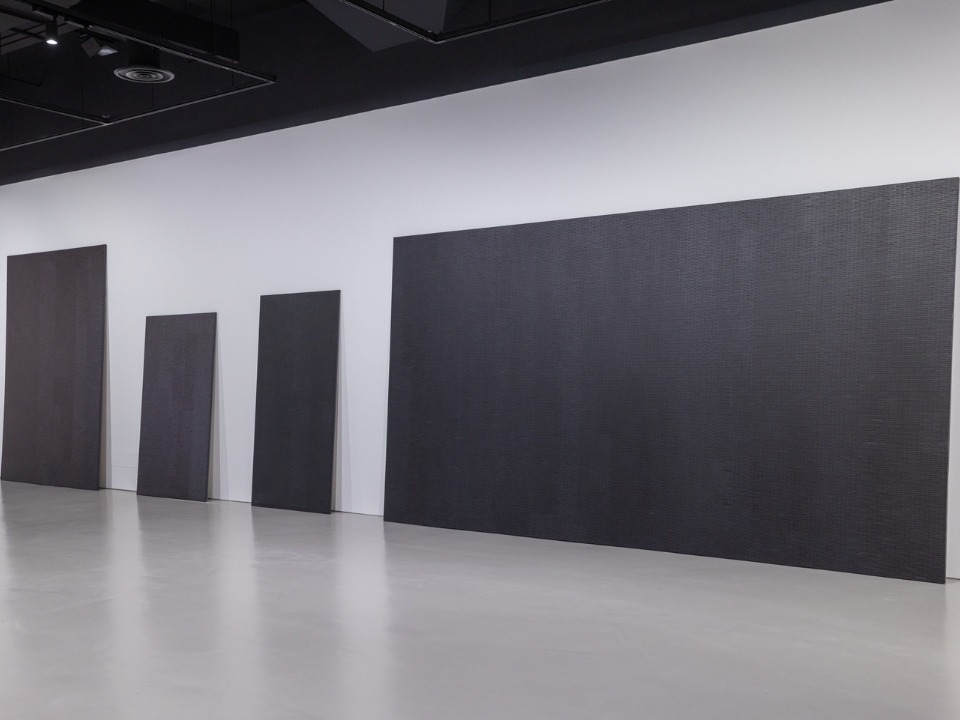
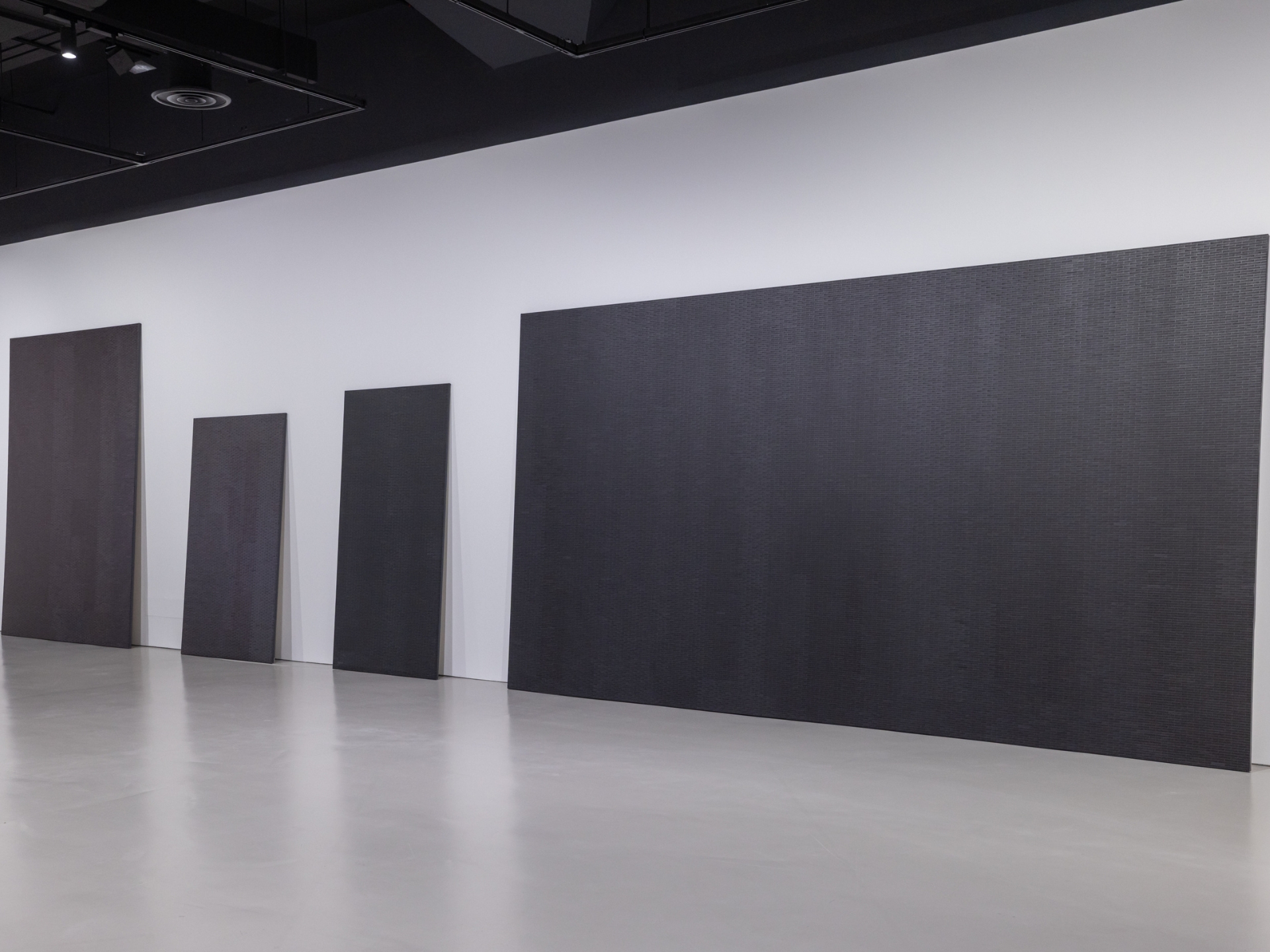
Taniguchi’s “brick paintings” (2008–ongoing), are characterised by uniform rows of pencil-drawn rectangles, each painted individually over the course of days or weeks. Subtle shifts in colour accumulate over time, reflecting the artist’s creative process and encouraging introspection and extended viewing. Rather than a deliberate response to the art historical legacy of modernism, the brick-like geometric pattern that repeats across Taniguchi’s canvases captures the time and effort required to make them. Untitled and unnumbered, Taniguchi’s “brick paintings” are best understood as individual parts of a single artwork that continues to grow with each new painting. By leaning these large canvases against the gallery walls, Taniguchi blurs the boundaries between the flat surface of the painting, the canvas as a three-dimensional sculptural object, and the architectural space it occupies.
Installation view of Maria Taniguchi’s Untitled (2022–2026) as part of Maria Taniguchi: Afterimage at SAM at Tanjong Pagar Distripark. Image courtesy of Singapore Art Museum.
Maria TaniguchiRunaways
2026
Duhat wood, dimensions variable
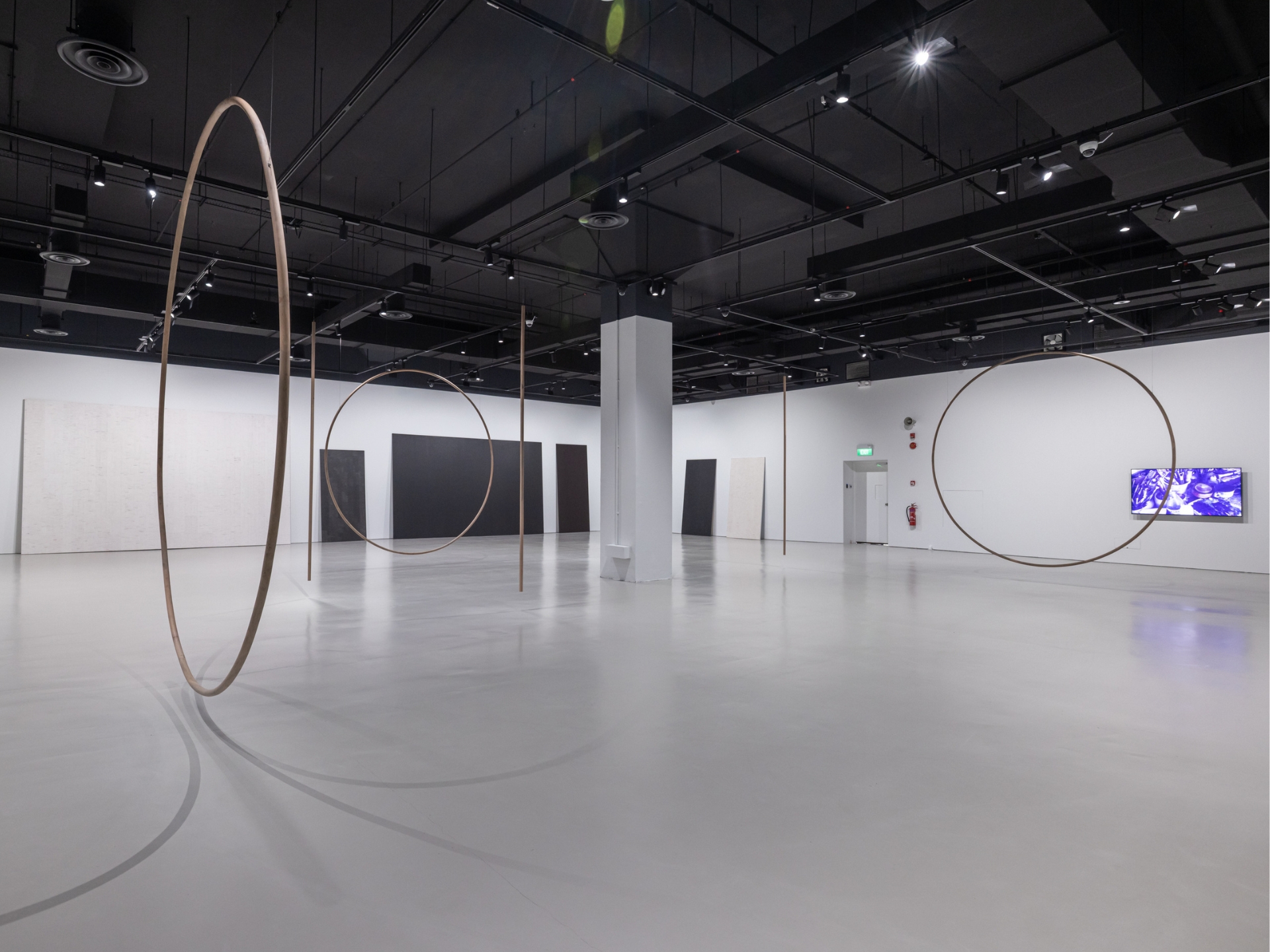
Taniguchi’s Runaways distil sculpture to its most basic forms, using circles and straight lines “drawn” in three-dimensional space. Using these two basic forms and a spare configuration the objects introduce a simple visual language that, like the 1 and 0 of binary code, suggests infinite possibilities. Carved from the wood of Java plum trees, known in the Philippines as duhat, the sculptures carry deeply personal associations of the artist’s mother who craved the fruit while pregnant. While the dark violet fruit of the Java plum evokes the deep colours of Taniguchi’s canvases, the use of duhat wood in her sculptures rejects the supposed objectivity of minimalist sculpture by incorporating personal biography and embracing craft rather than industrial production.
Installation view of Maria Taniguchi’s Runaways (2026) as part of Maria Taniguchi: Afterimage at SAM at Tanjong Pagar Distripark. Image courtesy of Singapore Art Museum.
Maria TaniguchiA painter, if black were a place
2026
Single-channel video (colour, sound), 1:52 min
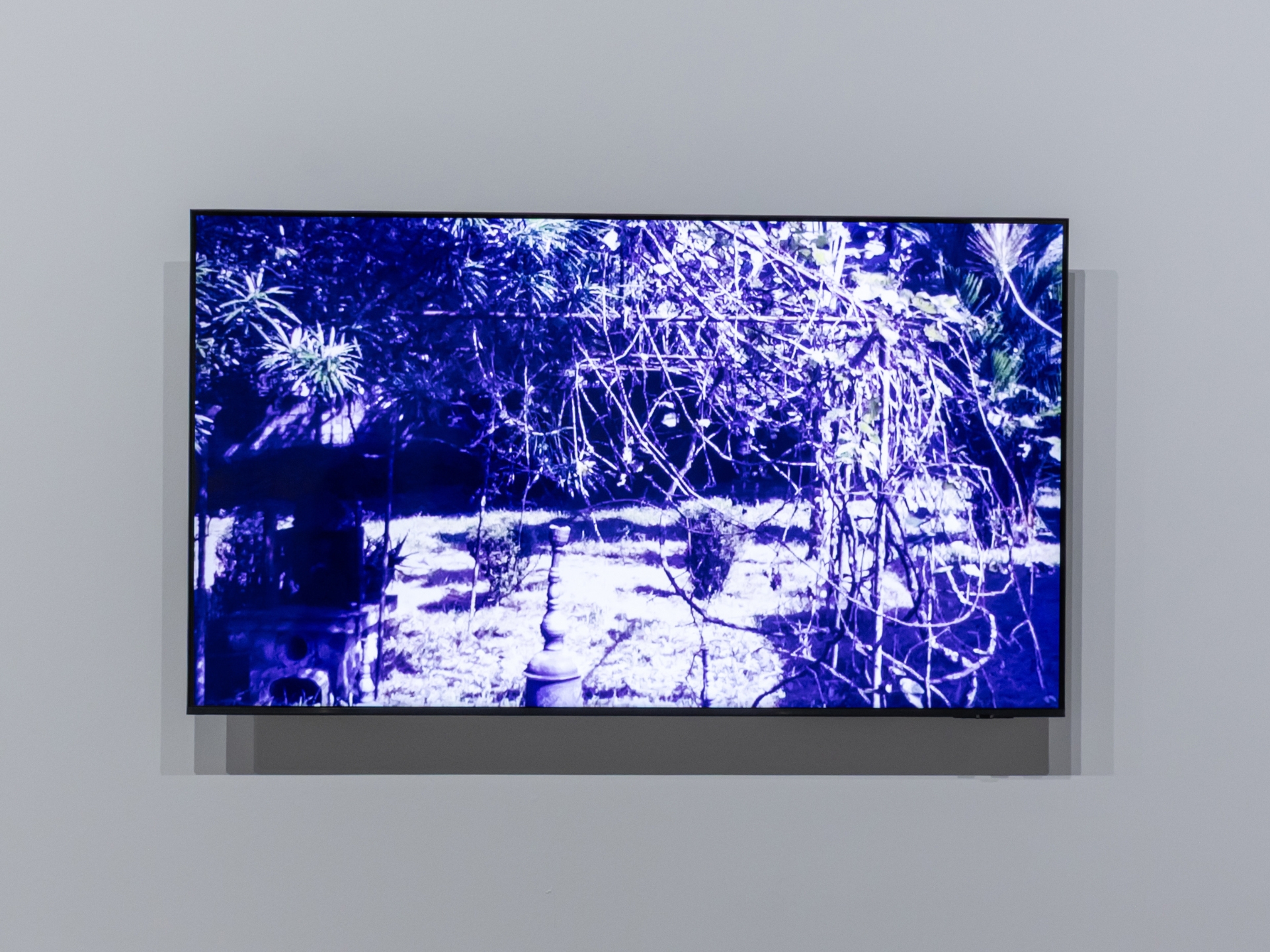
Taniguchi’s newest film, A painter, if black were a place (2026), mirrors the structure of Mies 421, using a series of still images that advance at a regular pace. The digital images, taken by an unknown photographer, depict closely cropped scenes of a garden populated by terracotta sculptures. The images are warm and intimate, yet their pixelation evokes a sense of nostalgia and suggests personal memories that become increasingly difficult to recall. Several paintings by the artist’s mother, Christina “Kitty” Taniguchi, are included in the sequence of images, returning focus to the intergenerational connection that informs the younger Taniguchi’s use of material in her Runaways sculptures. The stream of images is disrupted by short sequences that first appear to present a black screen but, like Taniguchi’s canvases, on closer inspection reveal themselves as hand-painted fields of colour containing subtle gradients and variations.
Installation view of Maria Taniguchi’s A painter, if black were a place (2026) as part of Maria Taniguchi: Afterimage at SAM at Tanjong Pagar Distripark. Image courtesy of Singapore Art Museum.
Maria TaniguchiFigure Study
2012
Single-channel video (black and white, sound), 37:12 min
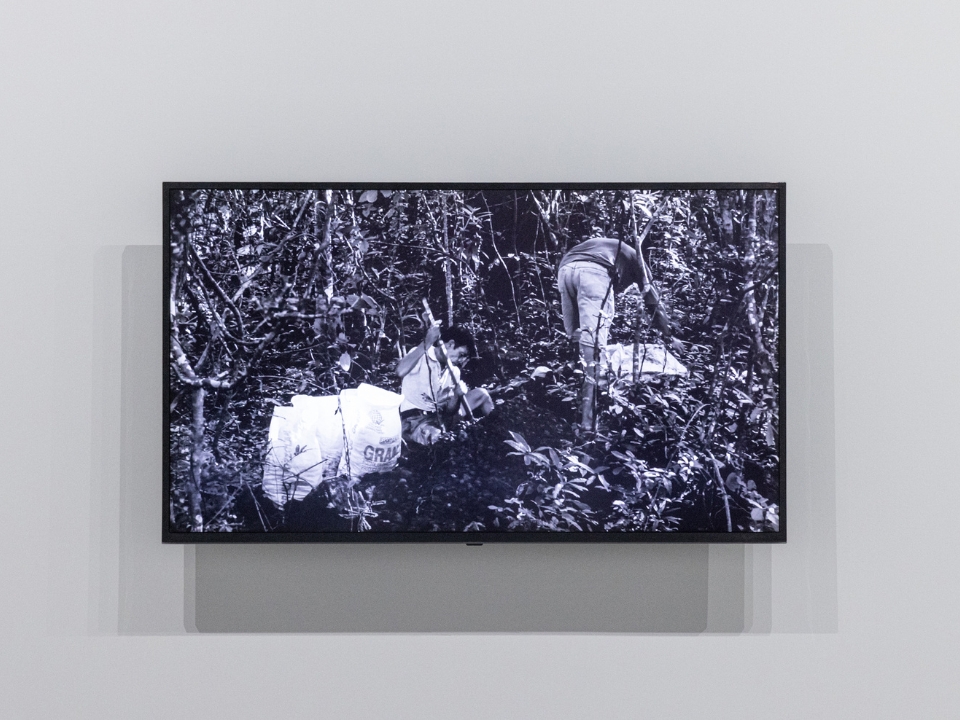
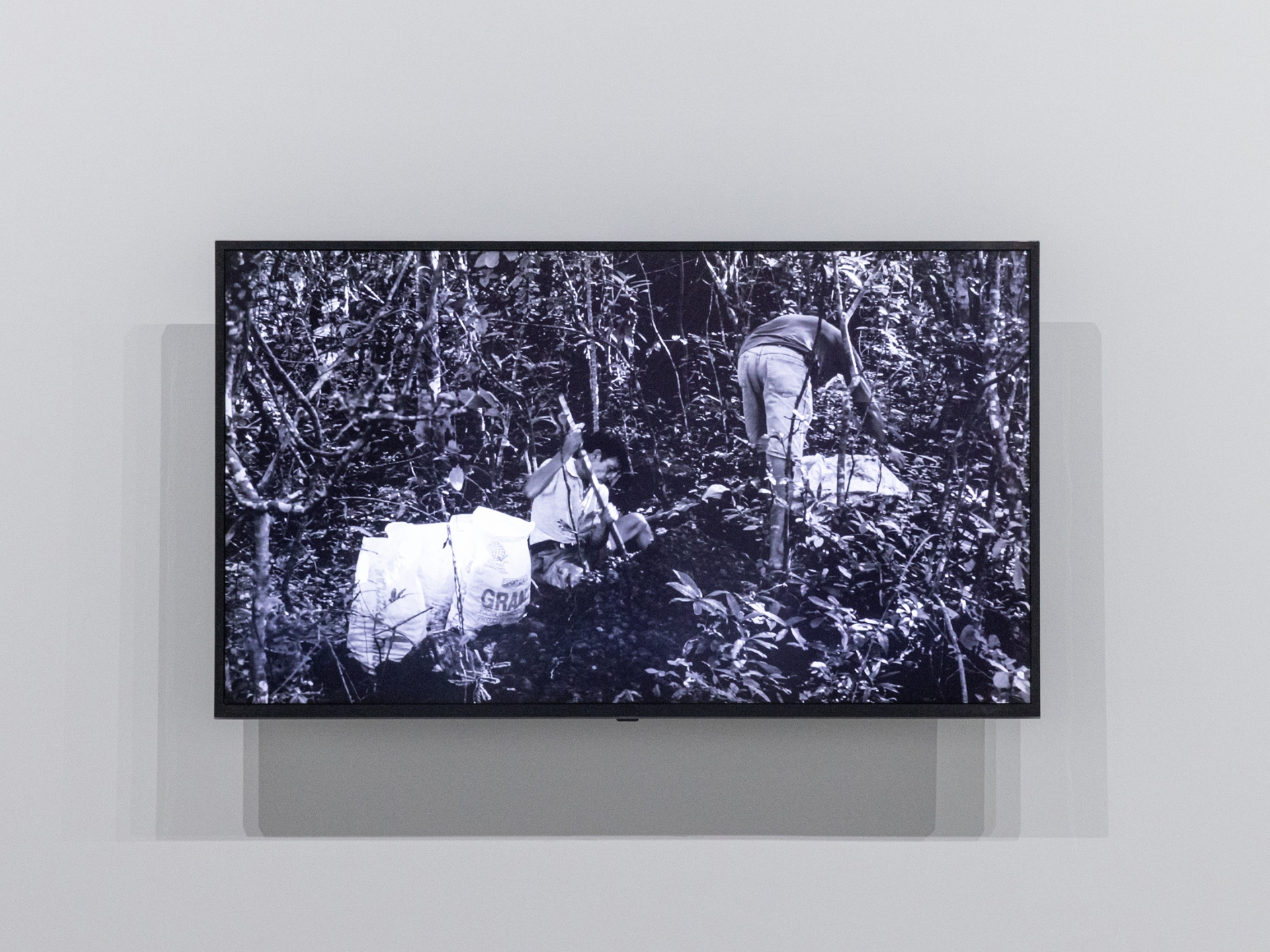
Figure Study (2012) reflects the organic elements and physical labour present throughout Taniguchi’s practice. The black-and-white film depicts two workers in a dense jungle digging a hole in the ground. From multiple angles the two figures are seen filling white bags with clay extracted from the hole. The continuous sound of their tools offers an irregular counterpoint to the ticking metronome that structures Taniguchi’s Mies 421, while the bags of clay that they remove from the earth anticipate the clay sculpture central to Figure Study (2018).
Installation view of Maria Taniguchi’s Figure Study (2012) as part of Maria Taniguchi: Afterimage at SAM at Tanjong Pagar Distripark. Image courtesy of Singapore Art Museum.
Maria TaniguchiFigure Study
2018
Single-channel video (colour, sound), 3:51 min
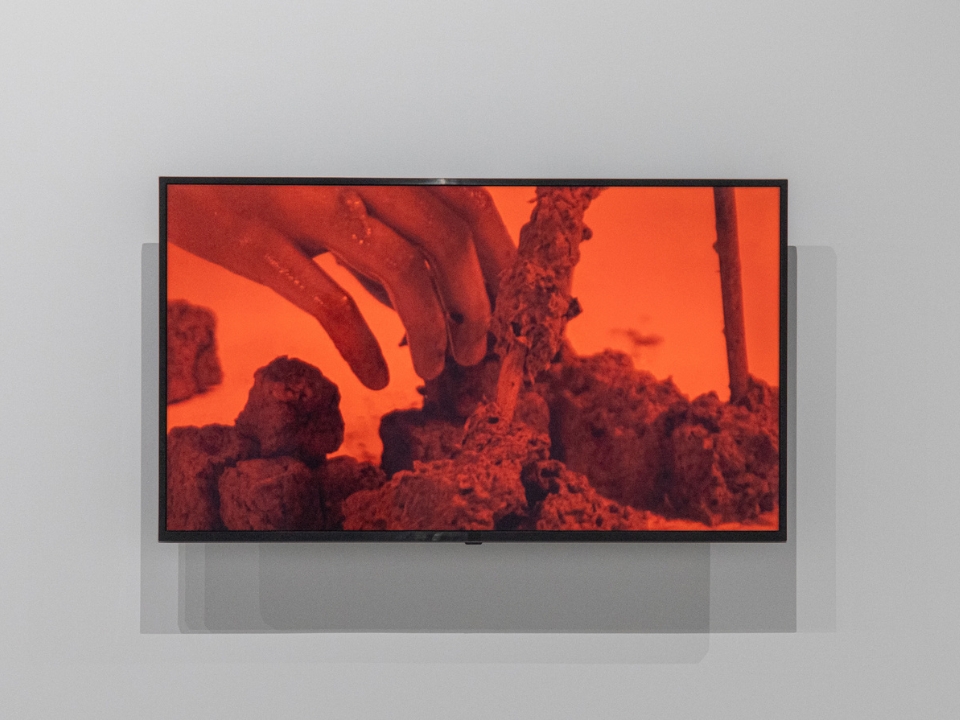
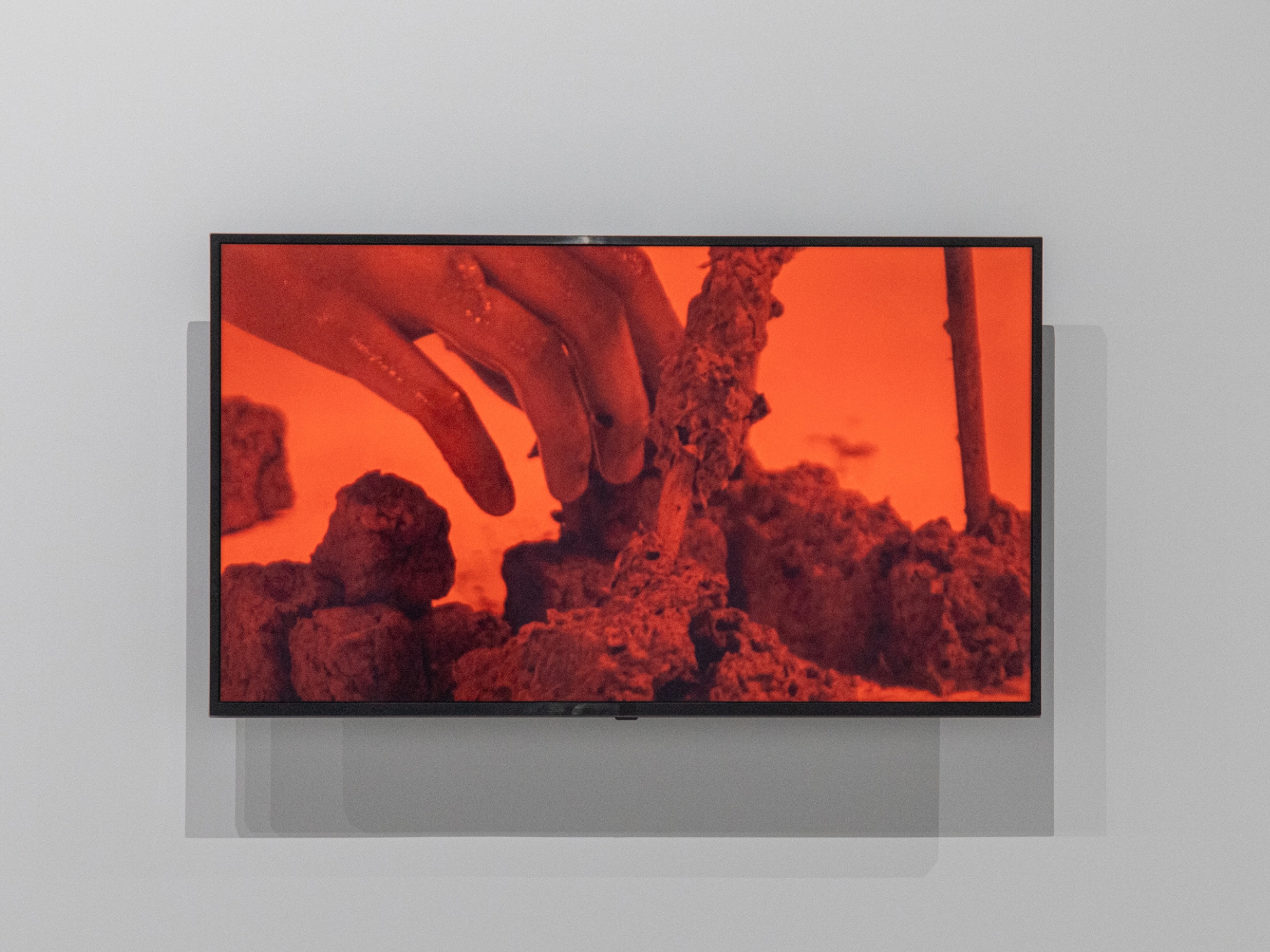
Figure Study (2018) highlights aspects central to Taniguchi’s filmmaking technique by focusing on the process of making rather than narrative. Deeply saturated red and blue images document the making of a clay object and its final form, while the tight framing of the images limits what the viewer sees. The carousel of still images seen in the first part of the film depicts the hands of the artist and the raw materiality of the clay as it is shaped, capturing the subtle traces of artistic labour exerted over time. These still images are juxtaposed with a single shot that traces the full length of a finished object, yet the narrow view of the camera prevents us from seeing how any part is connected to the object as a whole. These gestures recall the early object study exercises the artist undertook at the Philippine High School for the Arts, where students were tasked to experiment with various materials without having a predetermined outcome in mind.
Installation view of Maria Taniguchi’s Figure Study (2018) as part of Maria Taniguchi: Afterimage at SAM at Tanjong Pagar Distripark. Image courtesy of Singapore Art Museum.
Maria TaniguchiMies 421
2010
Single-channel video (black and white, sound), 4:07 min
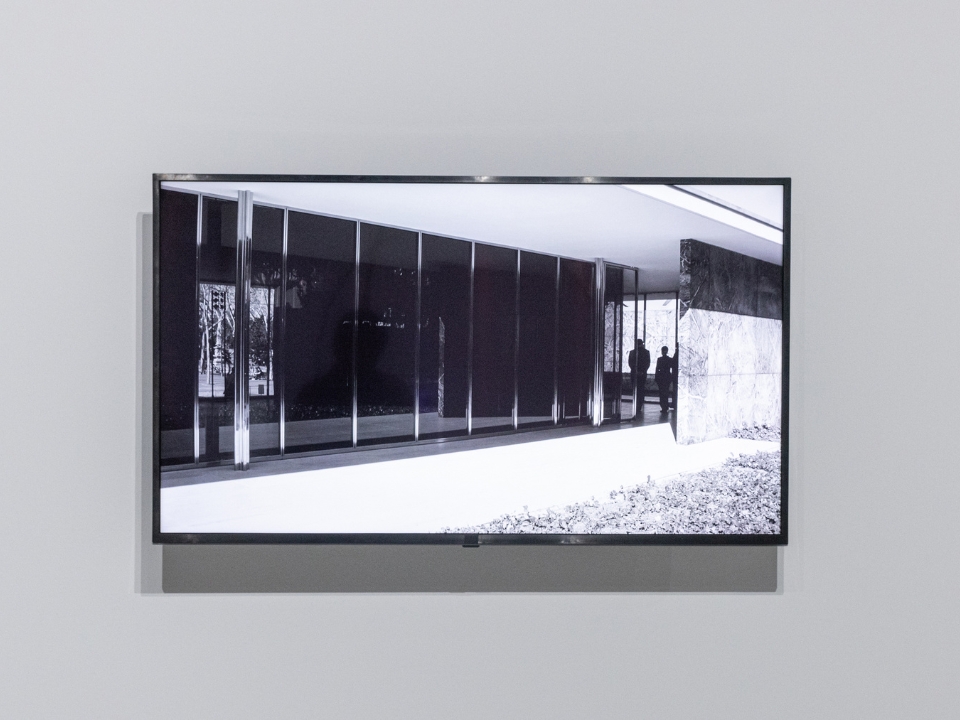
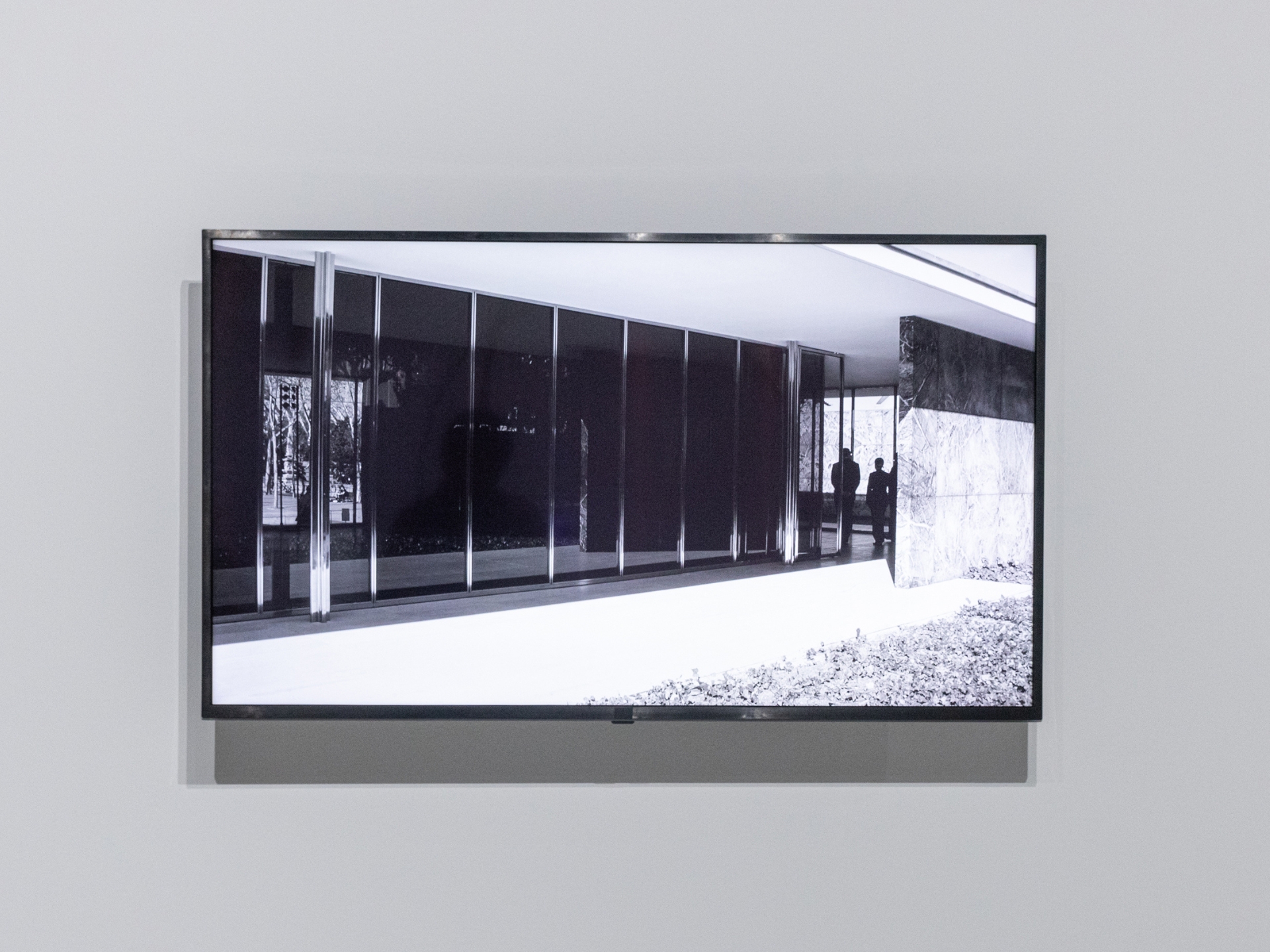
Mies 421 (2010) captures the structural details of the 1929 Barcelona Pavilion designed by influential German architects Mies van der Rohe and Lilly Reich. Taniguchi’s film uses black-and-white still photographs of the building that change in time with the accelerating tick of a metronome, creating an increasing sense of anxiety. The artist describes these still images in her videos as solid “objects” and the short gaps between them as “negative space,” linking them to her paintings and sculptures. Taniguchi’s attention to the minimal lines and the different surface textures throughout the Barcelona Pavilion underscore the architectural scale and surface variations of her familiar “brick paintings”, while foregrounding a process in which repeated parts are depicted as fragments of the whole.
Installation view of Maria Taniguchi’s Mies 421 (2010) as part of Maria Taniguchi: Afterimage at SAM at Tanjong Pagar Distripark. Image courtesy of Singapore Art Museum.
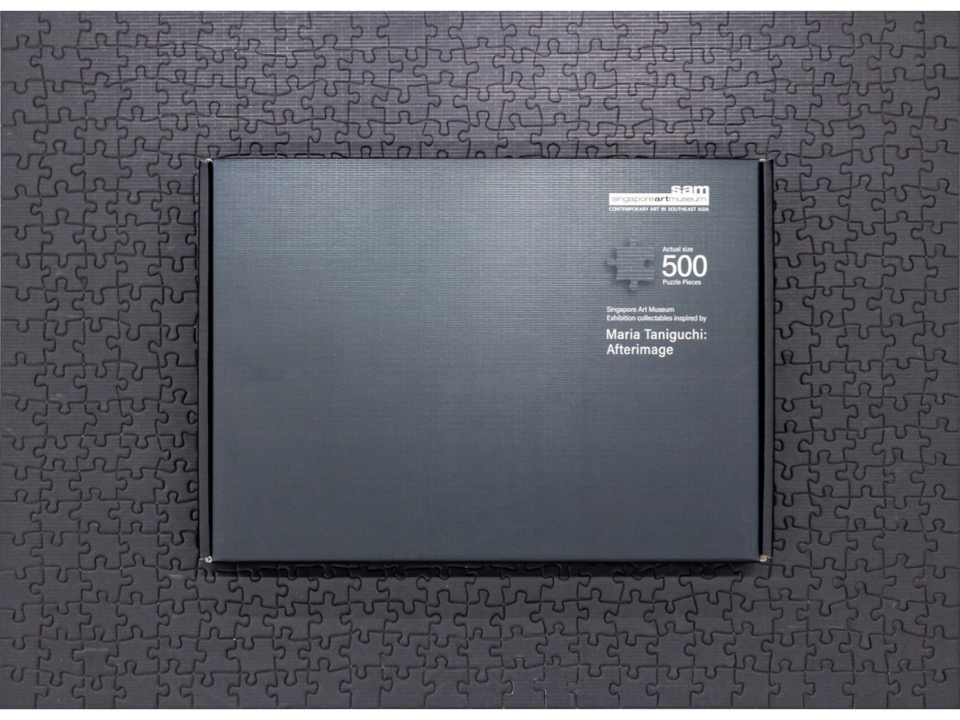
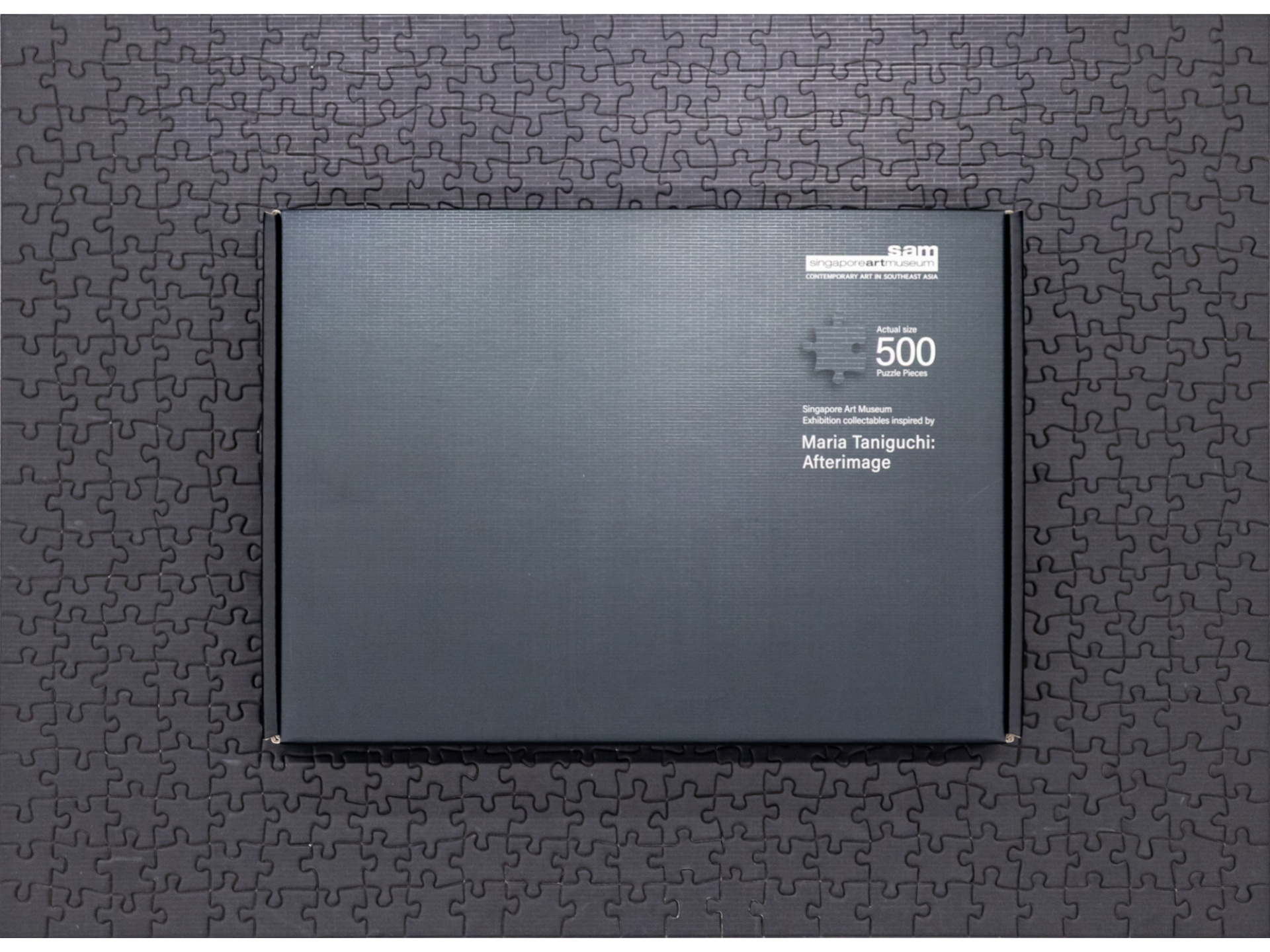
This puzzle set is inspired by Taniguchi’s “brick paintings” (2008 – ongoing), characterised by uniform rows of pencil-drawn rectangles, each painted individually over the course of days or weeks. Subtle shifts in colour accumulate over time, reflecting the artist’s creative process and encouraging introspection and extending viewing.

 Buy Tickets